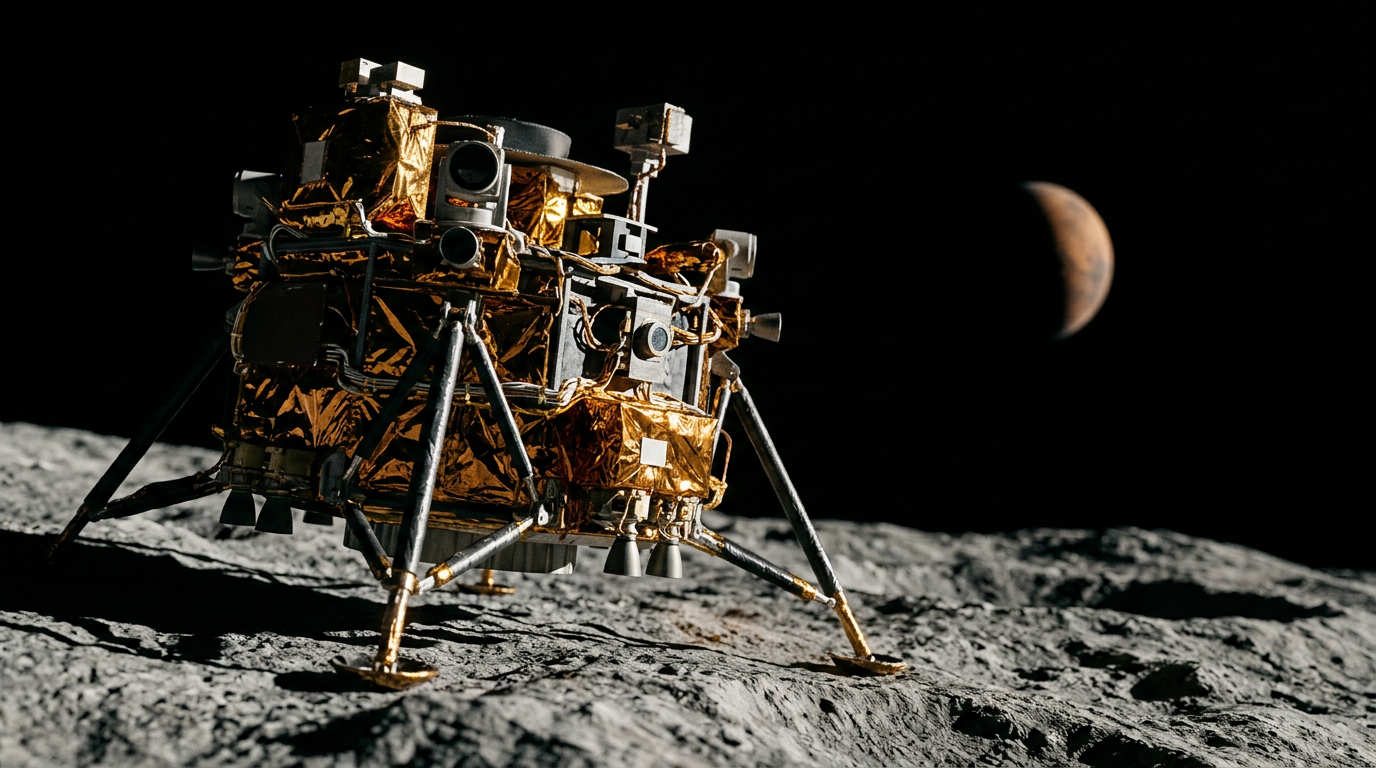
For over a decade, Elon Musk has championed a vision as audacious as any in modern history: making life multiplanetary. His company, SpaceX, has redefined rocket technology and slashed launch costs, turning what once seemed like science fiction into a tangible engineering roadmap. Starship—the fully reusable super-heavy launch vehicle—sits at the core of Musk’s plan to send humans to Mars by the 2030s.
The excitement is undeniable. SpaceX has achieved orbital milestones once thought impossible, and global interest in Mars has surged as NASA, China, and private actors race to unlock the Red Planet’s secrets. But behind the optimistic timelines and slick renderings lies a sobering truth: putting boots on Martian soil—and keeping humans alive there—is exponentially harder than launching a spacecraft into low-Earth orbit.
A Mars mission is not a lunar replay. It involves millions of kilometers of travel, up to two-year mission cycles, and irreversible exposure to environmental extremes. It also demands solving technological, logistical, physiological, and psychological puzzles at scales never before attempted.
This blog takes a 4,000-word deep dive into the biggest barriers left in Musk’s race against the Red Planet:
- How do we sustain human life in an environment with no breathable air, freezing temperatures, and toxic soil?
- Can we shield settlers from cosmic radiation without making missions prohibitively heavy and costly?
- What kind of supply chains and procurement strategies can support interplanetary operations?
- How do we prepare humans—mentally and emotionally—for isolation, confinement, and the “point of no return”?
By the end, you’ll see why Musk’s vision is more than a tech challenge—it’s a human, economic, and governance test that will define the next era of civilization.
The Elon Musk Life-Support Puzzle: Building a Closed-Loop Civilization
Mars is beautiful in photos. Up close, it’s deadly. Its atmosphere is 95% carbon dioxide, surface pressure is 1% of Earth’s, and temperatures plunge to -80°F (-62°C) at night. There’s no liquid water on the surface, only frozen reserves underground. Oxygen? Virtually zero.
To survive, settlers need Earth-like conditions inside habitats, which means delivering or producing:
- Oxygen for breathing
- Water for drinking, hygiene, and food production
- Food supply (with redundancy for crop failure)
- Waste recycling systems
- Energy for heating, lighting, and machinery
Current Progress and Gaps
NASA’s MOXIE experiment on the Perseverance rover has successfully produced small amounts of oxygen from Martian CO₂, proving in-situ resource utilization (ISRU) is viable. But scaling this from grams to tons required for crew survival and rocket refueling is a massive engineering leap.
Closed-loop life-support systems exist on the ISS, recycling 80-90% of water and some air, but they’ve never been tested for multi-year missions on a hostile planet. Unlike the ISS, Mars settlers can’t evacuate in an emergency—they’re six months and millions of kilometers away from Earth.
Radiation: The Silent Killer Beyond Earth’s Shield
Earth’s magnetic field shields us from galactic cosmic rays (GCRs) and solar particle events. Mars offers no such protection. Settlers will face radiation doses 50–100 times higher than on Earth, raising risks of:
- Cancer and tissue damage
- Degenerative health issues
- Cognitive impairment over long durations
A round trip to Mars, even with minimal surface stay, exposes astronauts to ~1 sievert of radiation, near NASA’s lifetime limit.
Proposed Solutions
- Regolith shielding: Building habitats under Martian soil for natural protection
- Water walls: Using water as a radiation barrier around crew modules
- Magnetic shields: Still conceptual, requiring breakthroughs in superconductivity
But all these add mass, cost, and complexity, the eternal enemies of space missions.
Supply Chains: The Interplanetary Logistics Nightmare
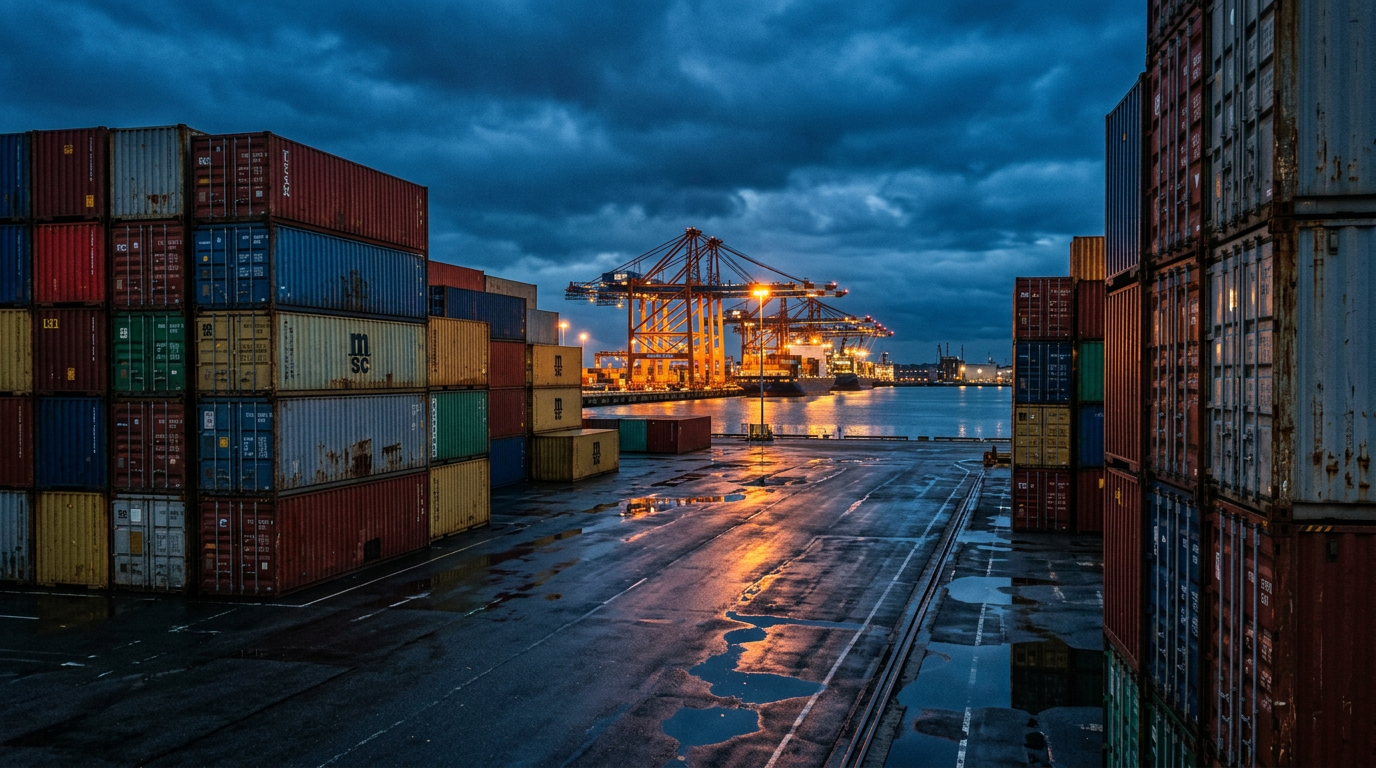
Elon Musk envisions hundreds of Starships ferrying cargo and settlers during favorable alignment windows every 26 months. Each Starship could deliver 100–150 tons of cargo, but even that is a drop compared to the tonnage needed for a self-sufficient colony.
Every kilogram counts—a rule that complicates bringing spare parts, food, and machinery for a society 55 million km away. Failures in supply chains aren’t minor inconveniences—they’re existential threats.
Current Strategies
- Pre-positioning supplies with automated cargo landings before crew arrival
- ISRU for water, fuel, and building materials
- 3D printing habitats and components using Martian regolith
Mattias Knutsson, Strategic Leader in Global Procurement, underscores this challenge:
“Mars supply chains make Earth-based logistics look simple. We’re talking about orchestrating multi-year procurement plans across planetary distances, integrating robotics, local manufacturing, and redundancy for survival-critical systems. One weak link can cascade into systemic failure.”
Psychological Barriers: Isolation in the Martian Frontier
A trip to Mars isn’t just physically punishing—it’s psychologically extreme. Crews will endure:
- 20-minute communication delays with Earth
- Months of confinement in a tin can during transit
- Total dependence on technology for survival
- Zero chance of rapid rescue
NASA’s HI-SEAS simulations in Hawaii and Russia’s Mars500 study show that isolation can trigger depression, interpersonal conflict, and cognitive decline. Mental resilience will be as critical as oxygen.
Mitigation Measures
- Rotating duties to reduce monotony
- Immersive VR for recreation
- AI-driven mental health support systems
Yet the psychological unknowns—What happens when someone snaps on Mars?—remain uncharted.
Economic Weight: Can the Business Case Hold?
Starship aims to lower launch costs to $10/kg, but even under optimistic assumptions, a crew mission could cost $10–15 billion. Critics argue that unless ISRU and local manufacturing succeed, Mars will remain a billionaire’s passion project, not a scalable economy.
However, advocates point to the long-term prize:
- Planetary backup for humanity
- Solar economy driven by off-world resources
- Catalytic tech for Earth industries
As Musk often says:
“Making life multiplanetary isn’t optional—it’s survival insurance.”
Technology Readiness: Are We There Yet?
NASA’s Artemis program will serve as a proving ground for Mars tech—surface habitats, ISRU, radiation shielding. SpaceX’s Starship is still in early testing, with orbital refueling and precision landing unproven at scale.
Expect multiple Starship generations and failures before first success. As history shows, Apollo required 11 years and a national budget priority. Mars is orders of magnitude harder.
A Dream Worth Fighting For—But Not on Hype Alone
Elon Musk has moved the Overton window for space. Ten years ago, Mars was a pipe dream. Today, we have hardware on launch pads and a serious industrial push toward the Red Planet. Yet the obstacles ahead—life-support reliability, radiation protection, interplanetary logistics, and human psychology—demand solutions that combine engineering brilliance with unprecedented collaboration.
As Mattias Knutsson aptly notes:
“Space isn’t just about rockets—it’s about resilient systems, ethical sourcing, and procurement strategies that can operate beyond Earth’s orbit. The winners will be those who think like builders of civilizations, not just launch providers.”
Will Musk conquer these challenges? Perhaps not alone. But his audacity has ignited a global race—and whether in 2030 or 2050, humanity’s march to Mars feels inevitable. The Red Planet is no longer just a dot in the night sky. It’s the next test of our species’ resilience, vision, and unity.