For decades, nuclear fusion has been one of humanity’s most compelling scientific ambitions—a promise of virtually limitless, carbon‑free energy that could power our world without long‑lived radioactive waste. Yet “fusion,” for many years, felt like a distant dream: perpetually just an elusive goal on the horizon. An honest, up‑to‑date look at fusion energy in 2026 — where reactors stand, what milestones have been reached, the technical challenges that remain, and what to expect next on the path to commercial fusion power.
Today, in 2026, the narrative has shifted in remarkable ways. Unlike the vague promise of decades past, we now have tangible progress: experimental reactors that produce more power than ever before, startups with clear commercial designs, and a global research community that feels closer than ever to achieving net positive energy from fusion. But how close are we really? Are we on the brink of powering cities with fusion, or are we still years away from meaningful grid contributions?
This article offers a straightforward, realistic update on the state of fusion energy in 2026. We’ll explore where fusion reactors stand today, what milestones have been hit, the barriers that remain, and what the world can realistically expect next—without hype, and with a warm, human perspective on this extraordinary scientific journey.
Fusion Fundamentals: What “Success” Really Means
Before diving into progress, it’s worth revisiting what success in fusion energy actually looks like. There are several key benchmarks:
- Scientific Breakthrough: Demonstrating net energy gain—where more energy is produced from the fusion reactions than is consumed to initiate them.
- Engineering Demonstration: Operating a reactor with net energy gain consistently and reliably.
- Commercial Deployment: Building reactors that produce electricity to customers at competitive cost and scale.
Fusion’s complexity means each of these is a milestone in its own right—and the fusion community evaluates progress across all three.
Current Fusion Energy Reactor Progress in 2026
In 2026, multiple experimental reactors and designs around the world are advancing toward these goals. A mix of public research projects and private ventures is accelerating progress:
Experimental Breakthroughs
| Fusion Facility / Company | Type | Key Achievement (2026 Status) | What It Signals |
|---|---|---|---|
| Major National Tokamak | Magnetic Confinement | Sustained plasma at tens of millions of degrees | Improved stability and confinement |
| Compact Private Tokamak | Magnetic Confinement | Record magnetic field strength using new superconductors | Stronger fields → better confinement |
| Laser Fusion Facility | Inertial Confinement | Target ignition pulses and improved symmetry | Lessons for future ignition control |
| Alternative Methods (Z‑pinch / MIF) | Hybrid Approaches | Engineering prototypes with repeatable shots | Path to high rep‑rate reactors |
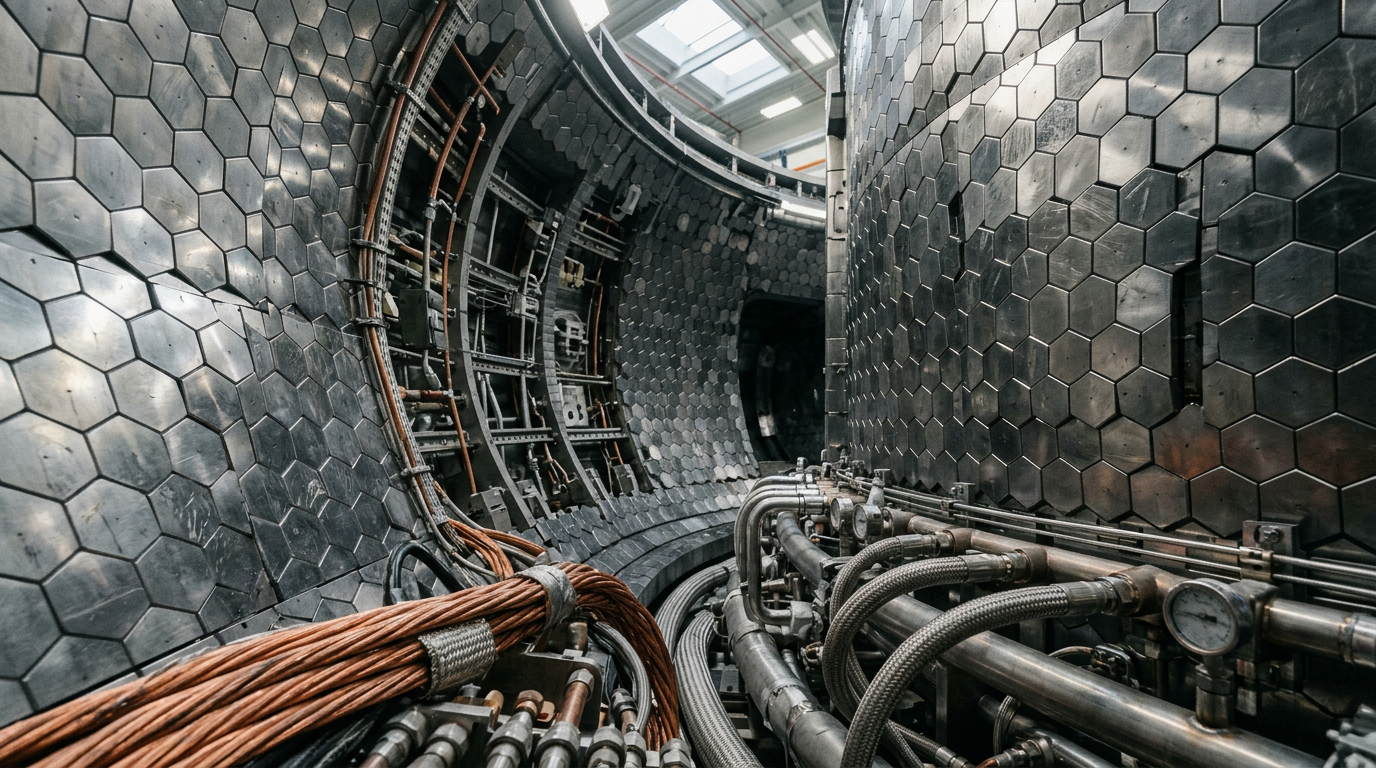
These facilities represent diverse fusion approaches—from large tokamaks to compact machines using advanced superconductors, to laser‑driven experiments attempting inertial confinement. Each contributes valuable data and insights that bring us closer to real fusion power.
It’s important to note that some experiments in 2025 and 2026 have reported net energy gain conditions in controlled bursts. While these gains were measured under specific definitions and experimental setups (not full continuous electricity production), they are genuine scientific milestones. In many ways, they represent the first tangible proof that fusion energy’s core concept can work under real laboratory conditions.
The Role of Private Fusion Startups
One of the most notable shifts in fusion progress over the last decade is the rise of private companies tackling fusion with bold new designs and commercial focus. These startups have:
- Attracted billions of dollars in investment from technology, energy, and venture capital.
- Pursued compact, high‑field designs made possible by new superconducting materials.
- Focused on scalability and manufacturability from the start, rather than follow purely academic research paths.
In 2026, many of these companies are transitioning from paper designs and early prototypes toward engineering testbeds intended to demonstrate key technologies—magnets, power handling systems, fuel processing, and integrated support systems.
The fusion ecosystem now includes dozens of companies worldwide exploring tokamaks, stellarators, magneto‑inertial fusion, and other innovative concepts. This diversity accelerates progress by promoting competition, cross‑pollination of ideas, and multiple simultaneous approaches rather than a single path forward.
How Far Are We From Continuous Fusion Power?
The big question is: when will fusion reactors produce continuous power that can be delivered to the electricity grid?
In 2026, the honest answer is: we are closer than ever before, but not there yet. Most current fusion experiments still operate in short bursts or specific controlled conditions. They validate concepts but do not yet function as reliable, continuous power sources.
Why Continuous Operation Is Hard
There are several deep technical challenges that must be overcome for a fusion reactor to operate continuously and deliver power:
- Plasma Stability: Maintaining a super‑hot plasma for long periods without disruptions is extremely difficult. Tiny disturbances can cause the plasma to collapse.
- Heat Handling: Materials must withstand extreme heat loads and neutron bombardment without degrading quickly.
- Tritium Fuel Cycle: The fuel used in many fusion reactions includes tritium, which must be bred, handled, and recycled safely and economically.
- Energy Capture: Converting the energy produced by fusion into electricity requires efficient energy extraction and heat exchange systems.
These challenges are not insurmountable, but they are complex. Progress on all fronts is necessary to move from controlled bursts to commercially viable electricity production.
Realistic Timelines: What Experts Anticipate
Instead of wild predictions, most fusion experts in 2026 agree on a range of plausible timelines:
- 2026–2030: Key engineering demonstrations showing sustained net energy gain and improved reactor subsystems.
- 2030–2035: First commercial fusion power plants begin to supply power to test grids or industrial customers.
- Mid‑2030s and Beyond: Fusion starts scaling meaningfully, with multiple plants contributing to regional grids and broader power markets.
These are not guarantees, but they reflect the collective expectations of researchers, technologists, and private‑sector innovators who understand fusion’s realities.
Fusion Energy Barriers That Still Need Solving in 2026
Even as progress accelerates, major technical barriers remain:
Plasma Control
Fusion fuel must be heated and confined at extreme temperatures—well over 100 million degrees Celsius. Even minor instabilities can cause the plasma to lose confinement. Engineering control systems that can sustain these extreme conditions for hours, days, or weeks is a major area of ongoing research.
Material Durability
Fusion reactions produce intense neutron radiation that degrades reactor vessel materials over time. Most current materials can handle limited exposure. New high‑performance alloys, composites, and surface treatments are under development to extend reactor lifetimes and reduce maintenance demands.
Fuel Supply (Tritium)
Tritium—a key fuel isotope—is rare and must be bred inside the reactor using lithium blankets. Efficient tritium breeding and recycling systems are essential to avoid costly external fuel supply dependencies.
Cost and Manufacturing
Fusion reactors will initially be expensive and complex to build. Scaling demands industrial manufacturing capacity for precision components like superconducting magnets, specialized vacuum systems, and advanced thermal handling assemblies.
These barriers are significant, but they are the subject of intense global research effort. And unlike political or resource limitations, they are engineering challenges that can be solved with time, investment, and iterative design improvements.
What Fusion Could Mean for the Energy Landscape
Even at scale, fusion will not instantly replace all other energy sources. Instead, experts envision a world where fusion:
- Complements renewables like wind and solar by providing reliable baseload power.
- Supports high‑demand sectors such as hydrogen production, heavy industry, and data centers.
- Reduces dependence on fossil fuels in countries with fusion capabilities.
Because fusion has a very small physical footprint compared to large renewable farms, it offers flexibility in placement, making it suitable for urban and industrial zones that struggle to host large solar or wind installations.
Public Perception and Realistic Expectations
One of fusion’s unique challenges is public perception. For decades, fusion has been wrapped in myths—either as a miraculous solution that will end energy problems overnight or as an unattainable dream. Neither extreme is helpful.
In 2026, progress is tangible but incremental. We are not powering cities yet—but we are closer to the first commercially viable fusion plant than ever before. Managing expectations with clear communication is crucial to maintaining public support, investment confidence, and steady momentum.
Voices from the Field: Industry Insight
Leaders working at the intersection of technology and global business development emphasize that fusion’s success depends not only on physics but on industrial readiness and strategic planning. Many note that developing robust supply chains, scalable manufacturing, and trained workforces is just as important as scientific breakthroughs.
This holistic perspective—where engineering, procurement, workforce development, and innovation come together—is shaping how fusion efforts progress in 2026 and beyond.
Conclusion
In 2026, nuclear fusion is no longer a vague hope—it is a concrete scientific and engineering pursuit with measurable progress. Experiments have achieved milestones once thought distant. New technologies are proving themselves. Investment—both public and private—is accelerating.
But the true measure of fusion power will not be academic papers or short bursts of energy output. It will be continuous, reliable electricity delivered to the grid, and that breakthrough remains in the years ahead. The next decade will be transformative if technical barriers continue to fall and early engineering designs evolve into commercial installations.
Fusion’s path forward will be neither straightforward nor overnight—but it is closer than it has ever been. The science has matured into engineering, and the dream of harnessing the power of the stars is steadily becoming a part of our future energy reality. In 2026, we stand at the threshold of that future—on the cusp of a new era in clean, abundant, and sustainable power.