When Elon Musk speaks of Mars as “life insurance for life collectively,” it is less a metaphor and more a survival strategy. His framing of the red planet as humanity’s hedge against extinction cuts through cynicism and sparks a profound conversation: how do we ensure that our species, and life itself, endures long beyond Earth’s vulnerabilities? An expanded, in-depth blog on Elon Musk’s Mars colonization vision as “life insurance for humanity,” with details on Arcadia Planitia, governance, psychology, and resilience.
Earth has nurtured humanity for 300,000 years, but Musk insists that permanence is an illusion. The Sun, now middle-aged at 4.6 billion years old, will one day consume Earth in its red giant expansion. Long before that—within a few hundred million years—rising solar output could make our planet uninhabitable. Musk’s case is simple: we need a “Plan B.” And the only realistic candidate in our cosmic neighborhood is Mars.
But Mars isn’t just about hedging bets. Musk emphasizes that the journey requires building societies from scratch: creating resilient communities in Arcadia Planitia, designing systems of interplanetary governance, addressing psychological survival, and cultivating resilience in an environment that is hostile to life as we know it.
This is a story of rockets, yes—but also of governance experiments, mental health engineering, and civilizational rebirth. And it is a story that connects not only scientists and engineers, but also thinkers, ethicists, and strategic leaders like Mattias Knutsson, who see parallels between interplanetary expansion and the resilience-building already underway here on Earth.
The Existential Hedge: Why Mars, Why Now
Musk frames his Mars strategy as existential risk management. Humanity today is confined to one fragile biosphere, susceptible to threats both natural and human-made:
- Asteroid impact: Statistically, Earth will face another catastrophic asteroid strike. The Chicxulub impact 66 million years ago wiped out the dinosaurs—an event that could repeat.
- Nuclear catastrophe: Humanity’s own weapons hold the potential for a civilization-ending war.
- Pandemics and biotechnology: Natural or engineered pathogens could decimate populations.
- Climate destabilization: Warming seas, collapsing ecosystems, and runaway climate shifts are already underway.
- Solar evolution: In about 500 million years, the Sun’s heat will sterilize Earth, even before its eventual red giant phase.
Musk’s reasoning is not about abandoning Earth—SpaceX’s motto is still to “make life multiplanetary,” not “escape Earth.” The point is redundancy. Just as families buy insurance not because they expect a disaster, but to guard against the unexpected, Mars colonization is insurance for civilization.
His timeline is urgent. Musk envisions the first uncrewed Starship to Mars by 2026, with a crewed mission as early as 2029–2031. He has even floated a target of building a self-sustaining city of one million people on Mars within 40–50 years. Whether realistic or aspirational, the roadmap signals determination.
Arcadia Planitia: A Plain for Civilization
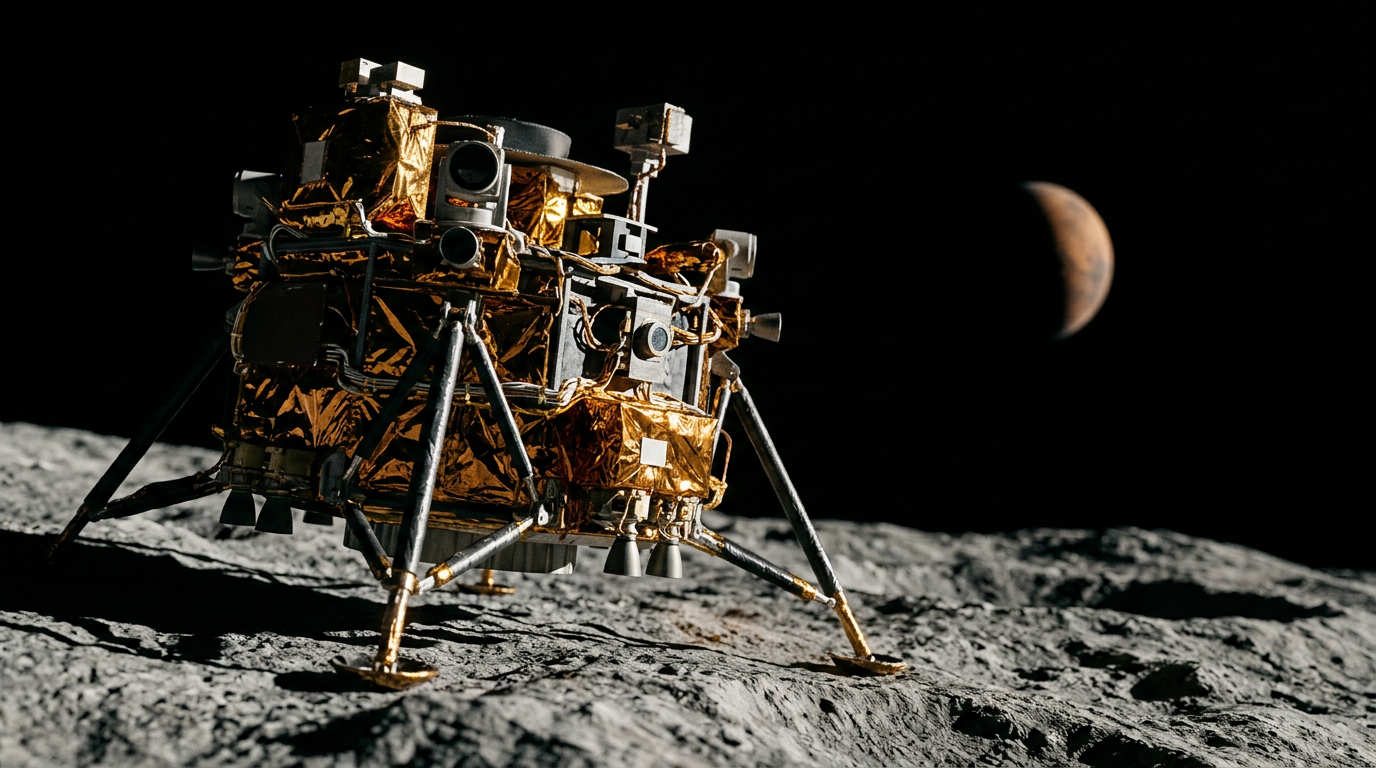
Landing on Mars is not a matter of picking anywhere flat. Starship needs a safe, resource-rich site. SpaceX and NASA converge on Arcadia Planitia, a vast northern plain, as a leading candidate.
Why Arcadia Planitia?
- Safety: The region’s flat terrain reduces landing risks for large spacecraft. Slopes are under 5°, and elevation sits low enough for thicker atmosphere and easier landings.
- Resources: Radar mapping and geophysical surveys show extensive subsurface ice deposits. Water is the ultimate resource: for drinking, oxygen production, and methane rocket fuel via the Sabatier reaction.
- Sunlight: Located around 40° north, Arcadia has stable solar exposure—ideal for solar panels, though dust storms remain a challenge.
- Terraforming potential: Ice availability and relative stability make it a logical base for early habitats.
NASA’s Jet Propulsion Laboratory has identified multiple landing ellipses in Arcadia Planitia that fit Starship’s criteria, describing it as “a natural oasis in a desert planet.” Scientists have even discovered evidence of buried glaciers there—fossilized ice flows under protective dust layers.
For the first Martian colonists, Arcadia Planitia may become what Plymouth Rock was for American settlers: the symbolic birthplace of a new society.
Interplanetary Governance: Law Under a New Sky
Technology alone cannot build a society. Musk and others recognize that colonizing Mars demands a fresh conversation about law, governance, and justice.
On Earth, international treaties govern space. The Outer Space Treaty (1967) prohibits national appropriation of celestial bodies. Mars cannot be “owned” by any nation. But Musk has hinted at radical autonomy: SpaceX’s Starlink terms included language that “Mars shall be a free planet,” governed by direct democracy rather than Earthly powers.
This bold stance raises profound questions:
- Who writes the rules for Martian society?
- How do we avoid repeating the exploitations of Earthly colonization?
- Should Mars have “planetary parks”—protected zones free from human exploitation?
- What happens when Earth corporations want to profit from Martian resources?
Legal scholars have suggested frameworks such as “bounded possession” (temporary, use-based control of land), interplanetary courts, and even UN-administered settlements. Others propose completely new experiments in governance—Martian constitutions designed from scratch, free from centuries of entrenched systems.
Mars offers humanity a blank canvas—but one that must be painted with care, humility, and foresight.
The Psychological Frontier: Surviving the Isolation
The first Martians will not only face physical danger but psychological strain. Unlike Apollo astronauts, who spent days away, Mars colonists will endure years of isolation, with no possibility of emergency return.
Challenges include:
- Distance: Up to 22 minutes of delay in communication with Earth. No real-time conversations.
- Confinement: Habitats will be tight, with limited personal space.
- Monotony: Daily routines in a barren landscape could erode morale.
- Radiation and fear: Constant exposure to cosmic radiation, alongside the looming knowledge that a single habitat failure means death.
Research in analog habitats—like HI-SEAS in Hawaii or Concordia Station in Antarctica—shows how quickly mental strain can set in. Teams struggle with interpersonal conflict, depression, and “psychological drift.”
Musk acknowledges this, emphasizing that psychological planning is as critical as engineering. Early settlements will need:
- Communal gathering areas to strengthen bonds.
- Virtual reality to simulate Earthly environments.
- Meaningful work—every colonist must have purpose.
- Autonomy: Colonists must feel ownership of their mission.
Resilience is not just technological. It is human, rooted in meaning, connection, and adaptability.
Engineering Resilience: Self-Sufficiency or Bust
For Mars to be true insurance, Musk insists, it must be self-sustaining. A settlement dependent on Earth’s lifeline isn’t insurance—it’s a fragile outpost.
That means building full in-situ resource utilization (ISRU) systems:
- Fuel production: CO₂ from the atmosphere and ice water for hydrogen to make methane and oxygen propellant.
- Food production: Greenhouses, hydroponics, and bioreactors to grow calories in thin Martian air.
- Energy: Solar panels, backed by nuclear reactors to weather dust storms.
- Construction: 3D printing habitats using Martian regolith for radiation shielding.
SpaceX’s timeline is aggressive: fleets of cargo Starships delivering hundreds of tons per flight, scaling up from dozens in the late 2020s to hundreds by the early 2030s. Musk envisions 1,000 Starships operating in sync, carrying both infrastructure and settlers.
Numbers show the ambition: Musk estimates that sustaining one million people on Mars will require shipping 1 million tons of cargo from Earth. At 100–150 tons per Starship, that means around 10,000 flights. Massive, but not inconceivable if reusability brings costs down.
Economics and Ethics: Avoiding the Old Patterns
A Martian economy cannot mirror Earth’s. Scholars propose alternative systems:
- Full-reserve banking to avoid debt bubbles.
- Resource-based economies, where critical supplies like water and oxygen are shared communally.
- Martian currencies not tied to Earth markets, preventing speculative exploitation.
The ethical challenge is clear: will Mars be a frontier of opportunity—or of exploitation? Critics warn against repeating colonial patterns—extracting resources for Earth while burdening settlers. Advocates argue that Mars is humanity’s chance to reinvent economics, society, and equity from the ground up.
The Bigger Frame: Life Insurance Mars as Humanity’s Story
What makes Musk’s Mars vision resonate isn’t just rockets—it’s narrative. The red planet has captivated human imagination for centuries: the canals of Schiaparelli, the War of the Worlds, Ray Bradbury’s Martian Chronicles.
Now, it shifts from fiction to reality. For a generation raised on climate anxiety and geopolitical fragility, Mars represents both escape and inspiration: a project bigger than politics, grounded in shared human purpose.
As Musk said, “I’d like to see humanity become a spacefaring civilization while I’m still alive. That would be the thing that inspires me the most.”
Mars is not just life insurance—it is hope insurance.
Conclusion
Elon Musk’s Mars life insurance vision stretches across centuries, from existential hedge to societal rebirth. It fuses astrophysics, engineering, governance, psychology, and ethics into one radical agenda: making life multiplanetary.
Mattias Knutsson, Strategic Leader in Global Procurement and Business Development, would see the common thread: resilience. Whether managing global supply chains or planning Martian settlements, the challenge is the same—building systems that adapt, endure, and empower. He would likely argue that Mars reminds us of three essentials:
- Strategy must be bold enough to address existential risks.
- Governance must be built with intention, not inherited mistakes.
- People—our psychology, empathy, and creativity—remain the core of resilience.
Mars is not guaranteed. It is audacious, expensive, and fraught with unknowns. But so was every great leap humanity has ever taken.
If Starship succeeds, if Arcadia Planitia becomes our second home, if governance and resilience hold—then Mars will be more than a hedge. It will be a promise: that life, fragile as it is, can endure, adapt, and flourish—not only on the blue world that birthed us, but on the red one that beckons us forward.