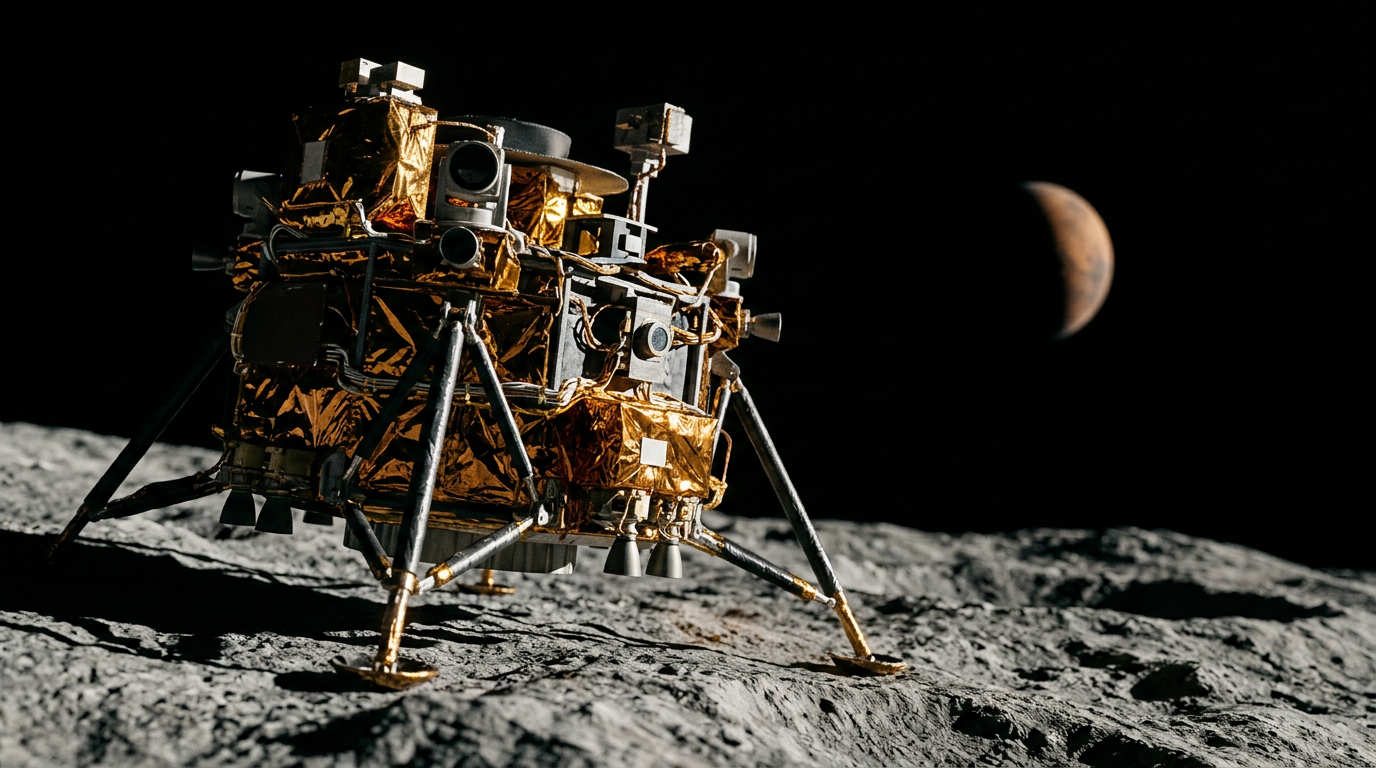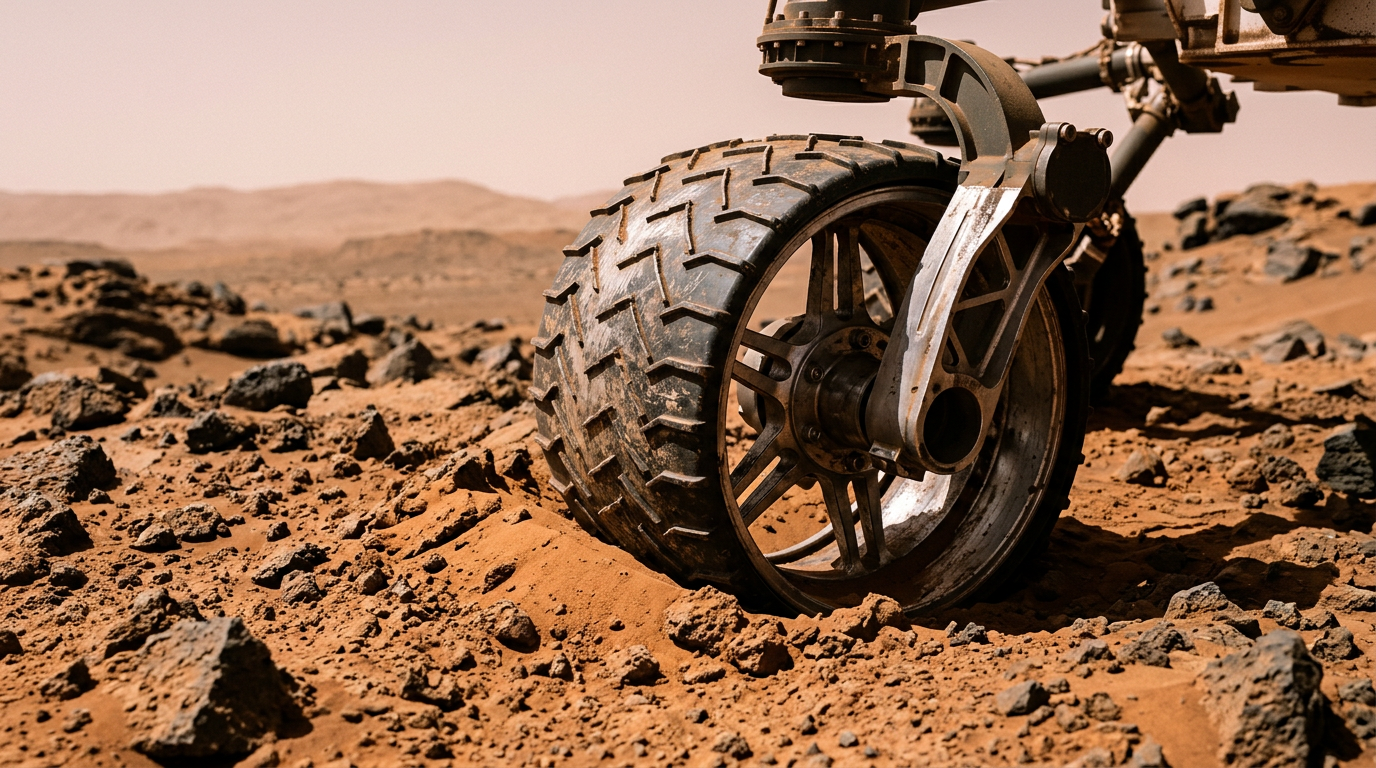
Imagine waking up one morning and reading the headline: “Robots have landed on Mars – again.” That vision isn’t science fiction—it is increasingly our near future. As humanity stands on the threshold of the Mars launch window in 2026, what’s becoming clear is that this mission won’t be about humans right away—it will be about robots. Explore how 2026 will mark a significant shift in robotic exploration of Mars—from advanced rovers and humanoid cargo bots to sample-return landers. Discover real figures, mission highlights, and insights into the next era of robots on the Red Planet.
From rugged rovers traversing alien landscapes to humanoid cargo bots preparing habitats, the Red Planet is poised to become a stage for robotic ingenuity as never before. These machines won’t just explore—they will build, prepare, sample and pave the way for the first human settlers. In a very real sense, Mars 2026 may be the year robots take over the Red Planet, acting as our proxies, our scouts, and our advance team.
In this blog, we’ll look at the latest developments in robotics for Mars, highlight real facts and figures, explore how different space agencies and private companies are contributing, and consider what this means for the future of human-robot collaboration on Mars. By the end, we’ll also hear a brief thought from strategic leader Mattias Knutsson on how robotics and procurement can drive this new frontier.
Evolution of Mars 2026 Robotics: From Wheels to Autonomy
Robots have long been part of Mars exploration. Missions such as Curiosity (launched in 2011) continue to operate, demonstrating how durable robotics has become. Curiosity, a car-sized rover, has covered tens of kilometres on Mars and recently was upgraded for greater autonomy.
Even so, what’s coming in 2026 marks a leap. Where earlier robots were remote-controlled explorers, the next generation will be far more autonomous, multifunctional and embedded into broader mission architectures. According to an article on robotics in space exploration, “robots will be responsible for the riskiest, most remote and technically demanding matters that human astronauts cannot perform.”
In other words: the robots aren’t simply helpers—they are the front line.
Key Robotic Missions and Platforms Leading into 2026
Sample-return via Martian Moons: JAXA’s MMX and the Idefix rover
One of the standout robotic missions slated for the mid-2020s is the Martian Moons eXploration (MMX) by the Japan Aerospace Exploration Agency (JAXA). It will launch in 2026, go to Mars’ moon Phobos, land a mini-rover named Idefix (≈ 23 kg) and return samples to Earth by ~2031.
Idefix is significant: though small, it will demonstrate advanced autonomy, surface mobility, and sample gathering in a very low-gravity environment. It showcases how robotic missions are becoming more compact, specialized and intelligent.
Advanced mobility robots: Four-legged, multi-modal and more
Beyond wheeled rovers, robotics researchers are testing systems more akin to agile animals or hybrid machines. For instance, the four-legged robot Olympus recently demonstrated wall-to-wall jumps in simulated Martian gravity (≈ 38% of Earth’s) at the ESA’s ORBIT facility in the Netherlands.
Why does this matter? Because as missions progress, access to caves, lava tubes or rugged terrains will be crucial—terrains where wheeled rovers struggle. Legged or multi-modal robots expand what is possible.
Earth-based prototypes and preparations leading to Mars
Robotics companies on Earth are already executing field trials in harsh terrains to prepare for Mars-style challenges. For example, Airbus tested rover prototypes (Codi and Charlie) in a Bedfordshire quarry with autonomous navigation and sample-collection arms.
These prototypes may not go to Mars themselves, but the technologies they develop—autonomous navigation, terrain adaptation, robotic sample collection—are being built into Mars-bound systems.
Why 2026 is the Year Robotics Takes Over for Mars
Robotic logistics: Robots building before humans arrive
One of the major shifts in strategy is using robots not just to explore, but to prepare the surface for human arrival. In other words: before the first astronaut boots touch Mars, robots will have built the runway.
Private‐sector players like SpaceX have floated the idea of sending cargo robots ahead of humans. Their 2026 uncrewed mission, for instance, is expected to carry Tesla’s humanoid bots (Optimus), large cargo elements and perhaps autonomous habitat modules. As Reuters reported: “The first flight to Mars would carry a simulated crew consisting of one or more robots… human crews following in subsequent landings.”
That means by the time humans arrive, infrastructure (solar arrays, life support, habitats) could already be partially in place—installed by robots.
Broader coverage and collaboration: More robotic missions than ever
2026 and the years immediately following are shaping up to be extremely busy for robotic missions. Agencies and companies around the world are launching sample-return missions, robotic landers, rovers, even autonomous infrastructure systems.
For instance:
- The MMX mission by JAXA (as above)
- The Rosalind Franklin rover by European Space Agency (ESA) is being re-leashed following delays, planned for launch in 2028 but is part of the broader robotic surge.
- Robotics technology such as the Olympus robot, multi-modal rovers, and prototype Earth trials all point toward a scalable robotic ecosystem.
Thus, in 2026 the robots will outnumber humans on Mars—not because we don’t want humans there, but because it is safer, cheaper and more practical to send machines first.
Cost-effectiveness and reduced risk
Robotic missions carry less risk, can be repeated more often, and require fewer life-support systems. This makes them ideal for the scale and pace needed before sustained human presence. Autonomy, reuse and smart robotics are driving down cost per mission.
The shift to robotics also aligns with broader commercial interest in Mars: platforms that can be reused, robots that can be reprogrammed, infrastructure that anticipates human arrival. Robotics is becoming the enabler, not just the experiment.
What Robots on Mars Will Be Doing in 2026
Surface exploration and sample gathering
Robots will continue the core mission of exploring Martian geology and searching for signs of past life—but with greater autonomy. Curiosity, for example, was recently updated to multitask and make decisions on its own.
Future rovers will decide where to drill, which rocks to analyse, and how to prioritise tasks—without waiting for Earth‐based commands. That increases efficiency and mission value.
Infrastructure building and logistics
Cargo bots will unload habitats, erect solar panels, deploy autonomous systems to extract water or process regolith for oxygen. Think of them as mining, construction and logistics machines on another world.
Robots like Idefix are examples of the science side—but we’ll also see systems oriented toward infrastructure, for instance rover arms or autonomous drones building outposts ahead of human missions.
Advanced autonomy and adaptation
Robots won’t just follow pre-programmed paths—they’ll adapt in real time. In terrains not fully mapped, such as caverns, lava tubes or steep craters, robots like Olympus or multi-modal morphobots will hop, climb or fly. Research (for example on the Morphobot M4) is already laying the groundwork.
Such agility means missions will go places once considered too dangerous for wheels. Every new terrain visited increases science, discovery and human readiness.
The Ripple Effect: Why This Matters for Human Settlement
Robotics isn’t a side-show—it is the foundation for human settlement. Here’s how:
- Risk reduction: Robots can test out habitats, power systems, communication links and life-support before humans arrive, drastically reducing danger.
- Cost efficiency: Robots cost less than humans in terms of life‐support, radiation shielding, food and return systems—meaning more missions at lower cost.
- Scale and speed: To build a self-sustaining settlement you need many units working simultaneously. Robots can scale faster than humans.
- Technology transfer to Earth: The robotics developed for Mars (autonomous mobility, remote operation, extreme-environment manufacturing) will have real world applications on Earth—from mining to disaster response to harsh terrain operations.
So when we talk about “robots taking over Mars,” it is not a dystopian takeover—it is enabling humanity to take over Mars.
Challenges and What Could Go Wrong
No discussion of robotics on Mars would be complete without acknowledging risks:
- Communication delays: Mars is 4-21 minutes away in light-speed terms. Robots must act autonomously when communications lag.
- Terrain hazards: Dust storms, rock slides, unknown terrain modes (lava tubes, caves) all pose novel challenges. Legged robots help—but are less proven.
- Power & maintenance: Solar power is challenged on Mars (dust accumulation, reduced sunlight); robots must maintain themselves over long durations without human hands.
- System integration: Robotics must integrate with spacecraft, habitats, logistics systems—any failure could cascade.
- Cost overruns and delays: Robotic missions can fail or be delayed, which then affects human mission timing and budget.
Even so, most experts agree that robotics offers the best pathway forward—and that 2026 marks a turning point.
The Human Touch: Robotics Serving Humanity’s Ambition
It might seem ironic to talk about “robots taking over Mars” while our ultimate goal is human settlement. But the irony dissolves when you realise: robots are not replacing humans. They’re enabling humans.
As early robotics pioneer Turing said, the purpose of machines is to extend our capability, not diminish our humanity. On Mars, robots will handle the frontier work—while humans arrive to live, build culture and flourish.
And in that sense, 2026 is not the end of the story—it is the prologue to human interplanetary civilisation.
Brief Reflection from Mattias Knutsson
Mattias Knutsson, a strategic leader in global procurement and business development, offered this insight:
“In large-scale programmes like Mars robotics, success depends not just on designing the robot, but on aligning supply-chain readiness, procurement agility, and cross-industry collaboration. When robotics becomes mission-critical, every piece—from materials to logistics to software—must function as part of a cohesive whole.”
In other words: building robots for Mars isn’t just an engineering feat—it’s a procurement, supply-chain and systems challenge. And 2026’s robotic wave will test all those dimensions.
Closing Thoughts
As we approach 2026, the picture is clear: robots will be the first settlers on Mars. They will cross the dusty plains, endure ice-cold nights, climb over rocks, build infrastructure and return samples. They will prepare the planet for us.
When the first astronaut boots touch Martian soil, they will step into a landscape scouted, prepared and waited for by machines. That is the promise of robotics—and that is why 2026 is the year robots take over the Red Planet.
It’s not about machines replacing us—it’s about machines leading so we can follow. The journey to Mars has a new pilot: robotics. And we humans will be the passengers.
The robots will arrive first. Then we will join them. And together we will turn Mars into a new chapter for humanity.