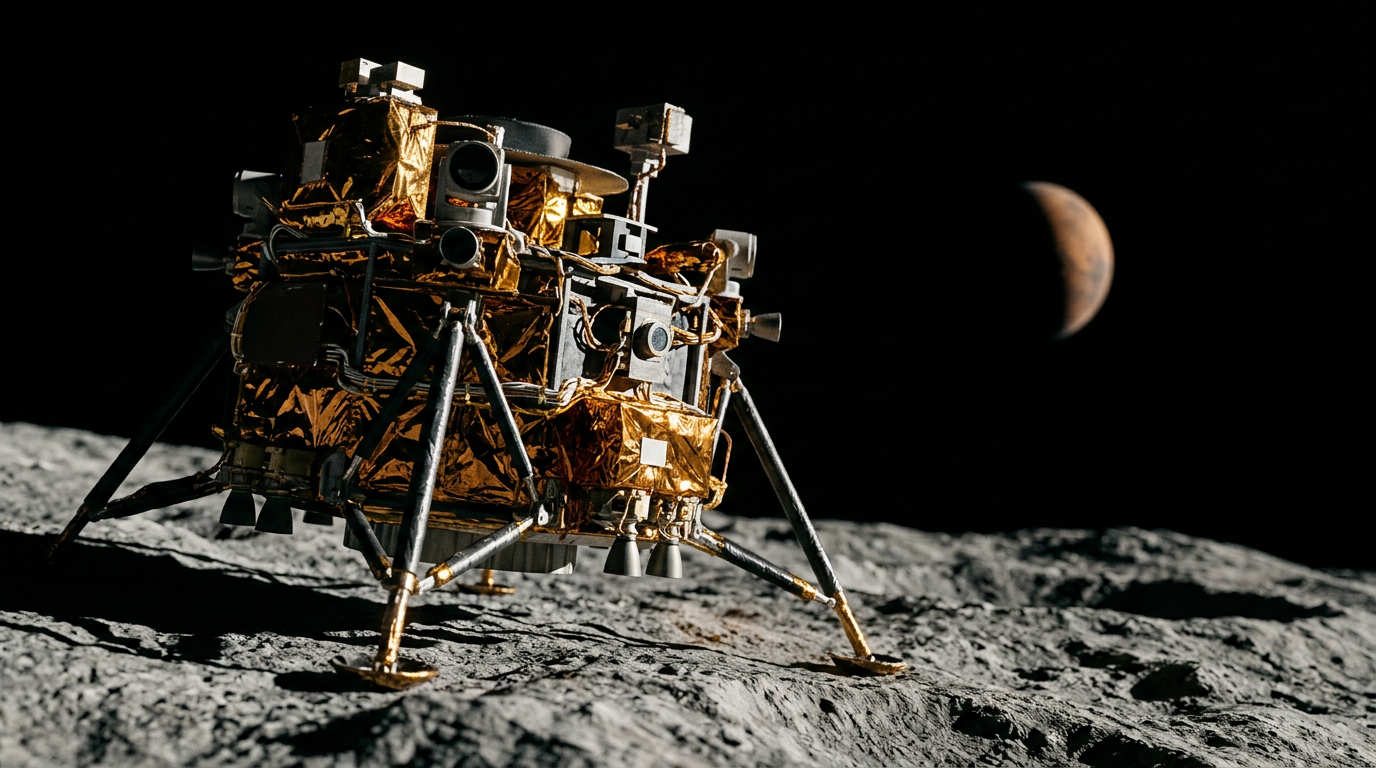
Humanity has always dreamed of the stars. From ancient stargazers charting constellations to modern astronomers scanning galaxies, the night sky has been a canvas for our imagination. Now, for the first time in history, our species is not just dreaming but preparing to step beyond Earth on a scale that could change civilization forever. Humanity’s mission to Mars is only the beginning. Discover how Mars could serve as the launchpad for deeper space exploration—mars to Jupiter, Saturn, and the far reaches of our solar system.
Mars is central to this vision. For SpaceX, NASA, and other space agencies, Mars is not simply the next dot on the map—it is a proving ground for interplanetary living. But Mars may hold an even greater role: the stepping stone to worlds much farther away. Once we master living on Mars, humanity could use it as a springboard for the outer planets, their moons, and ultimately for journeys to the stars themselves.
The road from Earth to Mars is challenging, but the road from Mars to Jupiter and beyond is where the next chapters of human exploration will be written.
Why Mars Comes First
Mars is not the closest celestial body—that honor belongs to the Moon. But Mars offers what the Moon cannot: a complex environment with resources that can support large-scale human settlement. Its 24.6-hour day allows for natural circadian rhythms. Also, its polar caps hold vast reserves of frozen water. Its thin atmosphere, while not breathable, contains carbon dioxide that could be converted into oxygen and methane fuel.
The lessons humanity learns on Mars—building habitats, recycling resources, coping with isolation—are directly transferable to deeper space missions. Think of Mars as the first classroom in an education that prepares us for the larger solar system. If we can survive and thrive there, we can take those systems to Jupiter’s icy moons or Saturn’s Titan.
Mars to Jupitor as a Resource Hub and Launchpoint
One of Mars’s greatest advantages is its shallower gravity well compared to Earth. Launching a spacecraft from Mars requires about one-third the energy needed to launch from Earth. This makes Mars a natural candidate for becoming the logistics hub of interplanetary missions.
Future Martian colonies could mine water ice to produce hydrogen and oxygen, creating rocket fuel. Imagine vast processing plants near the poles turning ice into liquid propellants stored in orbital depots. Cargo missions from Earth could deliver advanced components, while Mars provides fuel and construction material for outbound ships.
In the long run, Martian industry could enable massive spacecraft construction in orbit—vessels too large to ever launch from Earth intact. With this infrastructure, missions to Jupiter, Saturn, and beyond shift from science fiction to attainable engineering.
The Next Target: Jupiter’s Ocean Worlds
If Mars is humanity’s practice ground, Jupiter’s moons are the next great prize. Europa, with its icy crust and subsurface ocean, is one of the most promising places to search for extraterrestrial life. Ganymede, larger than Mercury, has its own magnetic field and vast resources of water ice. Callisto, heavily cratered, could host outposts with less radiation risk than other Jovian moons.
Robotic precursors are already paving the way. NASA’s Europa Clipper (launching in 2025) and ESA’s JUICE mission (Jupiter Icy Moons Explorer) will send back unprecedented data in the late 2020s. Human missions could follow by the 2040s, and Mars-based infrastructure might make such journeys feasible—reducing fuel demands and travel times compared to launching everything from Earth.
Beyond Jupiter: Toward Saturn and the Outer Planets
The path doesn’t stop at Jupiter. Saturn’s moon Titan is already seen as one of the most fascinating worlds for future explorers. With rivers and lakes of liquid methane, a thick atmosphere, and organic-rich chemistry, Titan could reveal secrets of prebiotic chemistry—or even life in exotic forms. NASA’s Dragonfly mission, set for launch in 2028, will explore Titan by drone in the 2030s, offering a preview of what human explorers may one day encounter.
Uranus and Neptune, though more distant, may eventually be within reach through nuclear or fusion-powered spacecraft. Mars, once colonized, will act as the staging post that makes such expeditions realistic.
Propulsion: The Key to Deep Space
To move from Mars to Jupiter and beyond, propulsion is everything. Traditional chemical rockets would take years or decades for such journeys, exposing crews to radiation and isolation. That’s why nuclear thermal propulsion, solar-electric drives, and especially nuclear fusion engines are under active development.
Fusion-powered spacecraft, currently being designed by companies like Helicity Space and agencies like NASA’s research arms, could cut the trip to Jupiter to less than two years. Mars, with its potential for fuel production and testing grounds, may become the proving site for these revolutionary engines.
Mars to Jupitor Challenges That Await Humanity
Despite the excitement, enormous hurdles remain. Radiation beyond Earth’s magnetic shield poses long-term health risks. Dust storms on Mars and extreme cold in the outer planets challenge engineering designs. Supply chains must stretch across millions of kilometers.
As Mattias Knutsson, Strategic Leader in Global Procurement and Business Development, has emphasized in his analyses of frontier industries, the hidden risk often lies in procurement and logistics. For interplanetary missions, that means everything from specialized alloys for spacecraft to membranes for life-support systems must be sourced, delivered, and maintained across planetary distances. Knutsson notes that visionary ideas can only succeed if global procurement strategies are robust and sustainable—otherwise even the most advanced rockets will sit idle.
Conclusion:
Mars is often called humanity’s second home. But in truth, its greatest value may be as the road to everywhere else. The Red Planet offers the resources, position, and conditions to serve as a cosmic springboard. Once colonies are thriving there, the icy oceans of Europa, the alien skies of Titan, and even the frozen outer planets will no longer seem unreachable.
The timeline may span decades, but the trajectory is clear. Mars is not the end of humanity’s journey—it is the beginning of our transformation into a spacefaring species. With bold vision, resilient supply chains, and global cooperation, Mars will one day be remembered as the launchpad to Jupiter, Saturn, and the stars.
For the first time in history, when we look at the night sky, we can say not just “what if?” but “when?” And that makes this moment in human history extraordinary.