
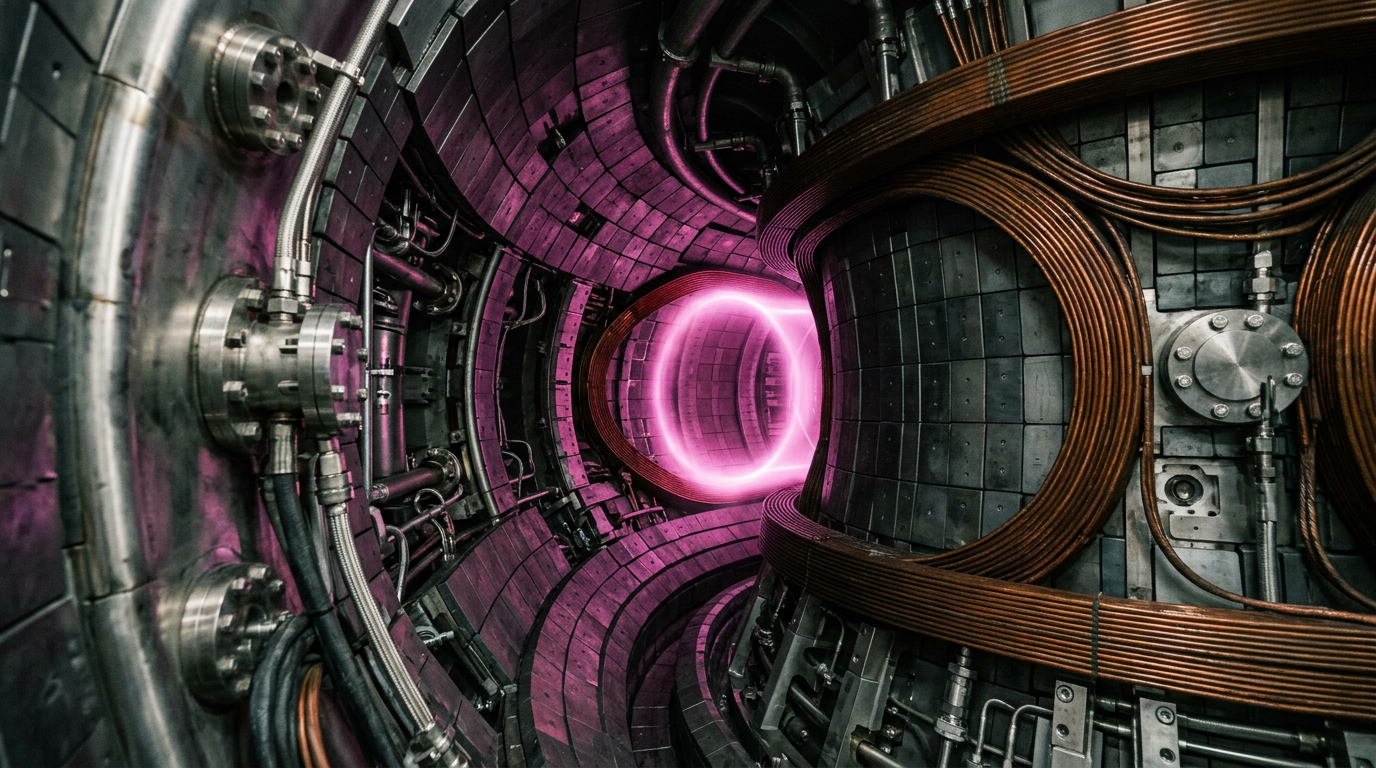
The race to commercial fusion energy is no longer purely the domain of national labs and public programmes. A wave of private-sector companies is charging ahead, each with its own distinct technology path, business model and set of ambitions. Among the most visible are Helion Energy, Commonwealth Fusion Systems (CFS), Tokamak Energy and TAE Technologies. A comparative look at four leading private fusion companies—Helion Energy, Commonwealth Fusion Systems (CFS), Tokamak Energy and TAE Technologies—their technology paths, strengths, risks and timelines heading into 2026.
While the big vision is shared — abundant, carbon-free electricity from fusion — the how, when, and what scale are diverging dramatically. Some aim for near-term demonstration, others favour more unconventional fuel cycles, still others build around advanced materials or superconductors. As we move into late 2025 and look toward 2026, it’s worth taking a careful look at the differences among these players: what they promise, where they stand, what they risk, and what to watch for.
In this blog we’ll compare each organisation’s technology, strengths and risks, timelines to 2026 (and beyond), and reflect on why their divergence matters for the broader fusion ecosystem.
Fusion Technologies 2026: Helion Energy
Helion Energy is one of the most aggressive in terms of near-term ambition. Based in Washington State, USA, Helion is working on a magneto-inertial fusion (MIF) concept, rather than a traditional tokamak. Their approach involves accelerating plasma rings, colliding them, and using the resulting magnetic flux changes to directly produce electricity.
Strengths:
- A different technological path means Helion is less tied to the long development curves of large tokamaks; if it works, it could be faster.
- In July 2025 they began construction of their “Orion” power-plant site in Malaga, Washington, targeting direct grid connection to Microsoft data centres.
- The business model is bold — directly selling power to large off-takers, which suggests strong commercial orientation.
Risks:
- The MIF concept is less proven at large scale; collisions of plasma rings must be tightly controlled and still need demonstration of net energy gain and durability.
- Building a full power plant so soon (by late-2020s) places extreme pressure on all components: plasma, repetition rate, heat-extraction systems, manufacturing.
- Supply-chain, component reliability, regulatory/permit risk — the “fastest path” comes with compressed margins for error.
Timeline:
- As of July 2025: construction under way of power-plant site.
- Their public target: electricity supply to data-centre load in upcoming years (though specific dates are fluid).
- For 2026: we should expect significant prototype milestones: full system assembly, demonstration of engineering gain (not just plasma gain), perhaps short pulses of net electricity.
- If all goes well, commercial rollout by late-2020s—but many caveats.
Fusion Technologies 2026: Commonwealth Fusion Systems (CFS)
Commonwealth Fusion Systems (a spin-out of MIT) is taking a more classic tokamak approach, but with the modern twist of high-temperature superconducting (HTS) magnets and a more compact device. They aim to leap ahead by using very strong fields and smaller footprints.
Strengths:
- By embracing HTS magnets, they reduce the size and cost of the reactor compared to traditional large tokamaks.
- Progress is tangible: in March 2025 they began assembling the SPARC tokamak — the cryostat base is in place.
- Excellent backing: strong investor support, alignment with MIT expertise and well-known roadmap.
Risks:
- Even with HTS and compact size, tokamaks remain extremely complex systems: magnets, plasma confinement, heat loads, materials, blankets.
- The timeline is ambitious: starting with SPARC then moving to ARC (their commercial plant) means several transition steps, each with risk of delay.
- Cost and manufacturing scale remain large challenges; the moment of “first electricity delivered commercially” still lies ahead.
Timeline:
- 2025: Assembly of SPARC begins.
- Construction of their commercial ARC facility planned for 2027–28 (according to some reports) with grid-connected electricity aimed for early 2030s.
- For 2026: key milestone likely SPARC first plasma, magnet tests, system integration stages. If successful, by late 2020s the commercial version comes.
- So although 2026 is still a “pre-commercial” year, CFS is in a strong position.
Fusion Technologies 2026: Tokamak Energy
Tokamak Energy is a UK-based company focusing on a spherical tokamak design combined with HTS magnets. They emphasise compactness, modularity and high-field operation.
Strengths:
- Spherical tokamaks promise higher plasma pressure and potentially more power density for a given size.
- Their HTS magnet work is industry-leading: they have achieved strong fields and are testing magnet technology applicable to fusion.
- The UK + international support (national labs, governments) gives them credibility and access to resources.
Risks:
- Their internal roadmap still places commercial pilot plants in the mid-2030s; thus for 2026 they are somewhat further out than some competitors.
- Spherical tokamaks bring their own engineering challenges: extreme shaping, plasma stability, magnet loads, blanket design.
- The gap between prototype magnet/plasma successes and a full power plant remains wide.
Timeline:
- By 2024 they had outlined a pilot tokamak design (800 MW fusion power, 85 MW net) for “mid-2030s”.
- Their next device ST80-HTS scheduled for 2026 to demonstrate HTS magnet / tokamak technology.
- For 2026: expect magnet tests, device assembly, plasma milestone devices rather than commercial electricity. The commercial phase still ahead.
Fusion Technologies 2026: TAE Technologies
TAE Technologies (formerly Tri Alpha Energy) has chosen a different path: an aneutronic fusion approach using a field-reversed configuration (FRC) plus advanced beam-driven plasma techniques, aiming for fuels such as p-B11 (proton-boron) that produce minimal neutrons.
Strengths:
- If successful, aneutronic fusion dramatically reduces neutron damage, shield and materials burden, offering potentially cleaner and simpler plants.
- They have raised substantial capital (over US $1 billion) and are partnering with major technology players (like Google) for AI/engineering support.
- Long-term vision is bold: prototype commercial fusion plant by 2030.
Risks:
- Aneutronic fuels typically require much higher temperatures and more extreme plasma control; that makes the engineering challenge even steeper.
- Divergent path means fewer “off-the-shelf” analogues to learn from.
- Timeline to commercial electricity is longer (2030+) than some of the other companies, so the near-term milestones may be less visible.
Timeline:
- As of 2025: latest funding round over $150 million (June 2025) to accelerate next step (Copernicus reactor) aimed at net energy gain.
- Prototype commercial plant (“Da Vinci” or similar) targeted early 2030s.
- For 2026: expect device upgrades, plasma control breakthroughs, possibly first net-gain trials for their FRC concept rather than full power plant deployment.
Summary Comparison Table
| Company | Technology Approach | Key Strength | Key Risk | Expected 2026 Milestone |
|---|---|---|---|---|
| Helion Energy | Magneto-Inertial Fusion (plasma ring collisions) | Fast path, direct electricity sales | Novel concept, risk in scaling & repeatability | Prototype construction, proof of engineering gain |
| Commonwealth Fusion Systems (CFS) | Compact tokamak with HTS magnets | Strong backing, proven tokamak path | Still complex, need many steps | SPARC assembly, magnet tests |
| Tokamak Energy | Spherical tokamak + HTS magnets | Compact geometry, high‐field magnet capability | Longer commercial timeline, spherical tokamak risks | ST80-HTS device, magnet/field demonstration |
| TAE Technologies | Aneutronic FRC (p-B11 fuel) | Very clean fuel, long‐term promise | Very high technical challenge, longer path | Plasma control breakthroughs, FRC net-gain experiments |
Why Their Divergence Matters
At first glance, it may look like a race where only the “winner” matters. But in truth, the varied approaches matter deeply for the broader fusion ecosystem.
- Having multiple technology paths increases the chance that at least one will succeed in the timeframe we need.
- Supply-chain, manufacturing, cost, fuel-cycle, materials issues differ by path — so what is challenging in one may be easier in another.
- Investments, partnerships, regulatory frameworks can follow whichever route shows credible progress — the divergence ensures flexibility.
- From a risk perspective, if one company or path falters, others may pick up the slack, de-risking the overall prospect of fusion energy.
The differences also highlight trade-offs: speed vs risk, known “tokamak heritage” vs disruptive fuel cycles, near-term prototype vs longer-term commercial robustness. Observers and investors need to understand these variations to make sense of the hype and the timelines.
What to Watch for in 2026
As we approach 2026, here are some signs worth watching across these companies:
- First plasma operations (or major assembly milestones) for devices like CFS SPARC, Tokamak ST80-HTS or Helion’s next gen.
- Magnet and HTS breakthroughs — if high-field HTS magnets reach reliability and manufacturability, that will unlock many designs.
- Engineering gain / net electricity announcements — one of the most credible proof points will be “more energy out than in for the full system”, not just the plasma.
- Commercial off-take contracts and manufacturing deals — seeing power-purchase agreements (PPAs), industrial backing, site permitting. Helion’s deal with Microsoft is an example.
- Funding and supply-chain announcements — major contract wins, materials supply, pilot-plant financing will indicate seriousness.
- Regulatory or permitting progress — fusion still needs regulatory clarity; pilot plants moving from social licence to execution is a big milestone.
Any one of these could shift the narrative from “fusion is always 30 years away” to “fusion is arriving”. Conversely, visible delays or failures will test the bold claims and timelines.
Conclusion
The journey toward commercial fusion energy is far from a monolithic path. Companies like Helion Energy, Commonwealth Fusion Systems, Tokamak Energy and TAE Technologies are each choosing different routes — some faster, some riskier, some more conservative — to achieve the same grand vision. By 2026 we won’t yet have the full commercial plants in operation, but we may well see the first credible prototypes, proof-of-concept milestones and major manufacturing build-outs.
What this means is that the divergence matters: the fusion future won’t be driven by one “winner takes all” but rather by a suite of technologies, partners, and systems that can each contribute something. The one that breaks through first may enjoy headline glory, but the one that scales effectively, safely, and cost-efficiently will actually redefine the energy system.
As strategic sourcing and commercial development expert Mattias Knutsson observes: “Innovation alone isn’t enough — what matters is the ecosystem of manufacturing, supply-chain, materials, regulation and deployment that supports it.” In the fusion race, the science is mesmerizing, but the silent gears behind the scenes – industrialisation, scalability, cost, integration — will decide whether that mesmerising promise becomes everyday reality.




