
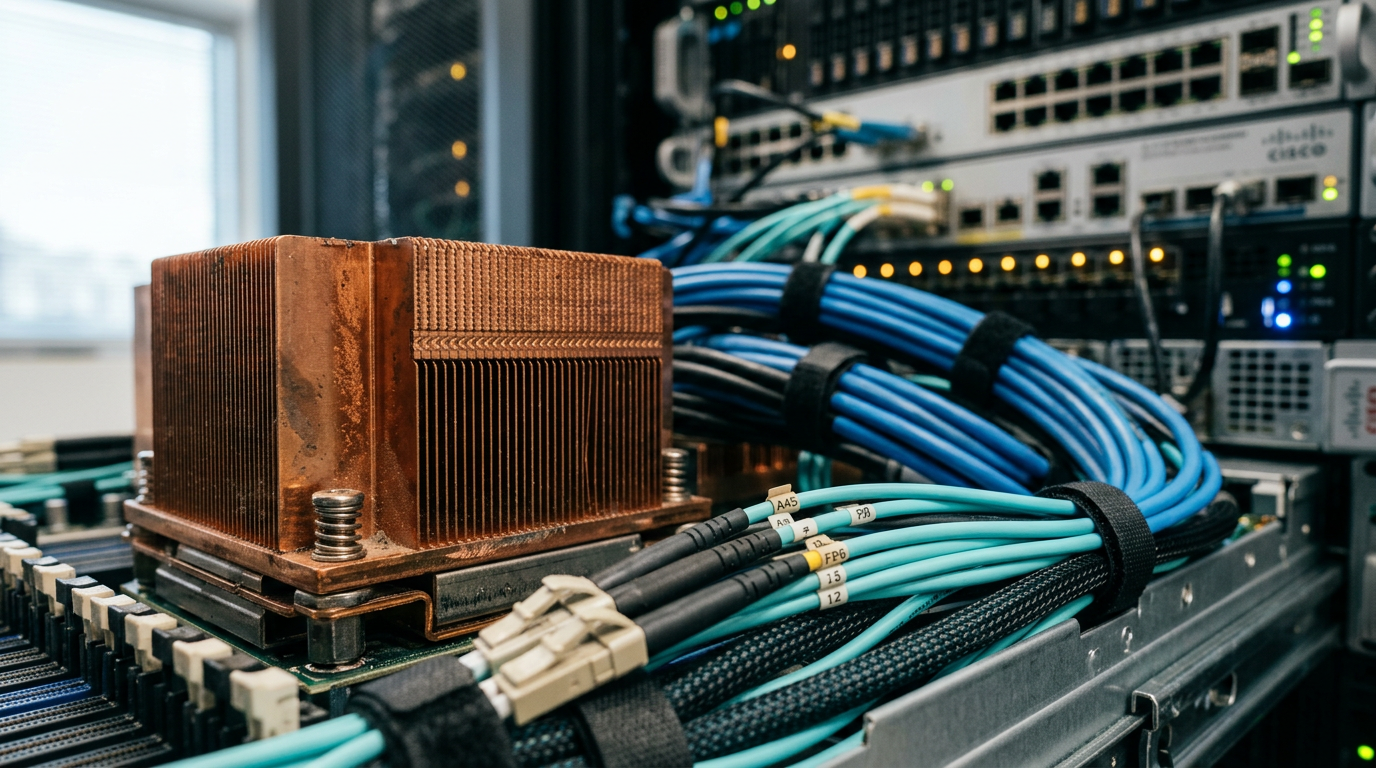
When Japan’s Fugaku supercomputer debuted in 2020, it symbolized more than computational muscle — it was a statement of intent. With over 442 petaflops peak performance and applications ranging from COVID-19 simulations to climate and materials science, Fugaku redefined the standard for human-oriented supercomputing. As RIKEN’s Fugaku evolves into FugakuNEXT, Japan shifts focus from hardware to ecosystem — open software, AI libraries, and virtual access redefining global quantum-AI collaboration by 2026.
But RIKEN and Fujitsu aren’t stopping there. The next evolution — FugakuNEXT, expected to launch around 2026 — is not merely about pushing teraflops into exaflops. It’s about building an ecosystem where researchers, developers, and AI systems can collaborate through open platforms, shared software libraries, and hybrid workflows that bridge HPC, AI, and quantum computing.
The focus has shifted from power to accessibility, from machines to methods, and from computing to collaboration.
As RIKEN President Makoto Gonokami summarized,
“FugakuNEXT is not just a machine. It’s a living ecosystem — one where computation, intelligence, and openness converge.”
Beyond Hardware: The New Heart of FugakuNEXT Ecosystem
Historically, supercomputing upgrades meant new processors, faster interconnects, and better cooling systems. But with FugakuNEXT, RIKEN’s goal is far broader: to create a software and algorithmic framework that allows seamless integration of AI, quantum systems, and virtualized computing environments.
This marks a paradigm shift.
Instead of measuring progress in FLOPs alone, success will be measured in “accessible intelligence” — how effectively thousands of users can collaborate, build upon, and extend the system’s capabilities.
The key initiatives shaping this ecosystem include:
- Open and shareable AI/ML libraries co-developed by RIKEN, Fujitsu, and Japanese universities.
- “Virtual Fugaku” — a digital twin of the supercomputer, available for simulation, training, and testing globally.
- Integration layers for hybrid quantum–classical workloads.
- Collaborative developer ecosystems, similar to open-source communities.
In short, RIKEN aims to transform FugakuNEXT into a platform, not a product.
Software Stack Evolution: Building Intelligence on Top of Power
FugakuNEXT’s software stack will be as important as its silicon. RIKEN’s roadmap emphasizes three interlocking software pillars: portability, openness, and co-design.
Portable & Scalable Programming Frameworks
FugakuNEXT will expand on the Arm-based architecture of Fugaku, but its software will support multi-platform compilation — enabling developers to port code seamlessly from other supercomputing systems or cloud AI frameworks.
RIKEN’s RIOS (RIKEN Integrated Operating System) will evolve into a more modular system supporting containerized workloads, Python-based orchestration, and HPC + AI job scheduling.
The goal is that by 2026, a researcher can:
- Run a molecular dynamics simulation on FugakuNEXT.
- Fine-tune the AI model on an NVIDIA GPU cloud.
- Integrate quantum computation results from a partner system — all within one consistent environment.
Open AI Libraries
To democratize access, RIKEN plans to publish AI and machine learning libraries optimized for FugakuNEXT, much like TensorFlow or PyTorch, but deeply integrated with the supercomputing fabric.
These libraries will include:
- High-dimensional data analysis packages for genomics and physics.
- Transformer-based natural language models for scientific text mining.
- Hybrid neural solvers that combine AI with physics-based modeling (AI4Science).
In partnership with Fujitsu and universities like Tokyo Tech, these tools will be open for both academic and industrial use — creating a community-driven ecosystem.
2. “Virtual Fugaku”: Democratizing Supercomputing
One of the most ambitious features of the FugakuNEXT ecosystem is the Virtual Fugaku platform — essentially a cloud-based digital twin of the supercomputer.
This system will allow global researchers to simulate, test, and optimize workloads as if they were running directly on the real machine — without needing physical access.
Think of it as GitHub meets a supercomputer:
Users can experiment with algorithms, test scaling behaviors, and share reproducible computational environments.
Key features under discussion include:
- Virtualized compute environments for AI, quantum simulation, and HPC benchmarking.
- Open-access datasets linked to real Fugaku research results.
- Visualization dashboards for educational use, enabling students to “see” how large-scale computation works.
This initiative could redefine global research accessibility — enabling collaboration from smaller universities or startups without traditional HPC infrastructure.
3. Algorithmic Innovation: From Simulation to Synthesis
While Fugaku excelled at large-scale simulations, FugakuNEXT ecosystem vision extends into algorithmic synthesis — where AI and physics-based computation work together.
This shift means moving from descriptive to generative computation: not just modeling systems, but designing optimal ones.
For instance:
- In materials science, hybrid algorithms can propose new compounds for batteries or superconductors.
- In drug discovery, quantum-accelerated AI can suggest molecular designs and simulate reactions simultaneously.
- In climate modeling, AI models trained on Fugaku’s simulations can predict local phenomena faster than traditional models.
RIKEN’s Center for Computational Science (R-CCS) is actively developing multi-scale hybrid solvers, capable of distributing computation across classical, quantum, and AI resources dynamically.
This means that by 2026, researchers won’t have to choose between an HPC simulation or a neural network — they’ll use both in one unified framework.
4. Open Platforms & Collaboration Models
FugakuNEXT’s openness will be its defining feature.
RIKEN and Fujitsu are championing a “shared innovation model”, inviting global participation across academia, startups, and public institutions.
Expected open platforms include:
RIKEN Open Research Cloud (RORC)
An expanded infrastructure connecting FugakuNEXT with other RIKEN computing clusters and global partners through federated access. Researchers can submit hybrid jobs using standardized APIs.
AI-for-Science Developer Hub
This initiative will offer open-source tools, pre-trained models, and training materials for scientific AI — from quantum chemistry datasets to energy optimization benchmarks.
Quantum Integration Sandbox
In partnership with Q-STAR, RIKEN is developing a Quantum–HPC testbed to explore integration protocols with Fujitsu’s 64-qubit superconducting prototype. Developers will be able to test algorithms that run partly on classical nodes and partly on quantum processors.
By opening these platforms, Japan aims to make FugakuNEXT not just a national asset but a global collaborative engine — similar in spirit to CERN’s open science model.
5. Impact on Global Quantum–AI Research
The convergence of AI, HPC, and quantum computing is reshaping research priorities worldwide — and FugakuNEXT will sit at that intersection.
By 2026, it is expected to:
- Enable quantum-AI hybrid simulations, where machine learning models control quantum experiment parameters.
- Support AI-accelerated materials design, combining HPC-scale datasets with quantum simulations for atomic-level precision.
- Drive AI-assisted error correction — using FugakuNEXT’s classical resources to stabilize quantum operations in real time.
This ecosystem could significantly shorten R&D cycles in pharmaceuticals, renewable energy, and semiconductors — industries already investing heavily in Japan’s open computational infrastructure.
As one RIKEN researcher noted:
“The true potential of FugakuNEXT ecosystem lies not in its teraflops, but in the conversations between disciplines it enables.”
6. Access for Developers and Global Researchers
Accessibility will be a defining principle.
RIKEN is designing tiered access models so that different user groups — from students to multinational corporations — can engage meaningfully:
- Academic Access: University researchers can test algorithms on the Virtual Fugaku platform through RIKEN’s educational partnerships.
- Startup Programs: Tech startups working in AI or simulation will have access to cloud-based sandboxes with limited but scalable resources.
- Industrial Collaborations: Enterprises can co-develop algorithms with RIKEN under Japan’s National AI Strategy framework.
- Citizen Science Projects: Simplified interfaces for public participation — particularly in sustainability, environmental, and educational projects.
In other words, FugakuNEXT is positioned to become the world’s most open supercomputing ecosystem — aligning with Japan’s broader “Society 5.0” vision of human-centered digital innovation.
7. What This Means for the Global Research Landscape by 2026
The broader implication is that Japan is transforming supercomputing from an elite tool into a collaborative platform.
This mirrors the global shift seen in AI — from proprietary models to open frameworks (like Hugging Face or PyTorch). By following a similar model in HPC, RIKEN could democratize access to world-class computation, accelerating progress in sustainability, healthcare, materials, and space research.
By 2026, expect to see:
- A network of Virtual Fugaku nodes across Asia and Europe.
- Open-source AI models trained on Fugaku datasets powering international research.
- Collaborative projects integrating quantum accelerators and HPC nodes via global cloud platforms.
It’s an ecosystem that blurs not only technical boundaries but also national and disciplinary lines — making high-performance science truly global.
Conclusion
The story of FugakuNEXT Ecosystem is more than a tale of hardware evolution. It’s about redefining the relationship between computing and creativity.
Where Fugaku symbolized speed, FugakuNEXT symbolizes access.
Where the old HPC model focused on ownership, the new one emphasizes participation.
By 2026, Japan’s supercomputing strategy will have evolved into a platform for shared discovery — where AI scientists, physicists, quantum researchers, and even educators can build together.
As Mattias Knutsson, Strategic Leader in Global Procurement and Business Development, aptly notes:
“The next generation of progress will come not from isolated power, but from integrated intelligence — ecosystems like FugakuNEXT remind us that innovation is most powerful when it’s shared.”
In the end, FugakuNEXT’s greatest contribution may not be its speed or its algorithms, but its ability to connect minds across the world — creating a future where knowledge itself becomes the ultimate form of computing.




