Every civilization is built on supply chains — the silent lifelines that move materials, food, and technology where they’re needed most. From the Silk Road to modern e-commerce, logistics has shaped how societies grow. Now, in 2026, humanity is about to take that system off-world. The upcoming Mars missions 2026 — led by SpaceX, NASA, and international partners — are not just about science or exploration. They’re about building the first interplanetary supply chain in human history.
For the first time, engineers are thinking not only about how to get to Mars, but how to send and sustain life and equipment there — predictably, repeatedly, and safely.
It’s no longer enough to launch a spacecraft. The challenge now is to establish a logistics network 225 million kilometers away — one capable of delivering food, tools, 3D printers, and communication systems across the vastness of space.
Welcome to Mars 2026: where space travel meets global supply chain strategy.
Why Mars Mission 2026 Needs a Supply Chain
Every mission to Mars depends on two core pillars: energy and logistics.
Without reliable supply flow, exploration cannot evolve into habitation.
A one-way trip to Mars can take between 6 to 9 months, depending on orbital alignment. Communication delays vary from 5 to 20 minutes each way. There’s no resupply truck, no overnight delivery, and no “next-day fix” if something breaks.
To live or work sustainably on Mars, astronauts and systems will need:
- Food and medical supplies
- Habitat materials and oxygen generators
- Energy systems (solar, nuclear, fuel cells)
- Construction robots and 3D printers
- Communication and navigation infrastructure
Everything must be shipped, staged, and stored with extreme precision — years in advance.
That’s where 2026 becomes pivotal. This is the year when the first cargo systems and protocols for Mars resupply are being tested and deployed.
SpaceX Starship: The Cargo Ship of the Red Planet Mars Missions 2026
If NASA is leading the science, SpaceX is building the trucks.
The Starship — SpaceX’s fully reusable launch vehicle — is designed to carry up to 100 metric tons of cargo to Mars. For comparison, that’s more than four times the payload capacity of NASA’s Saturn V moon rocket.
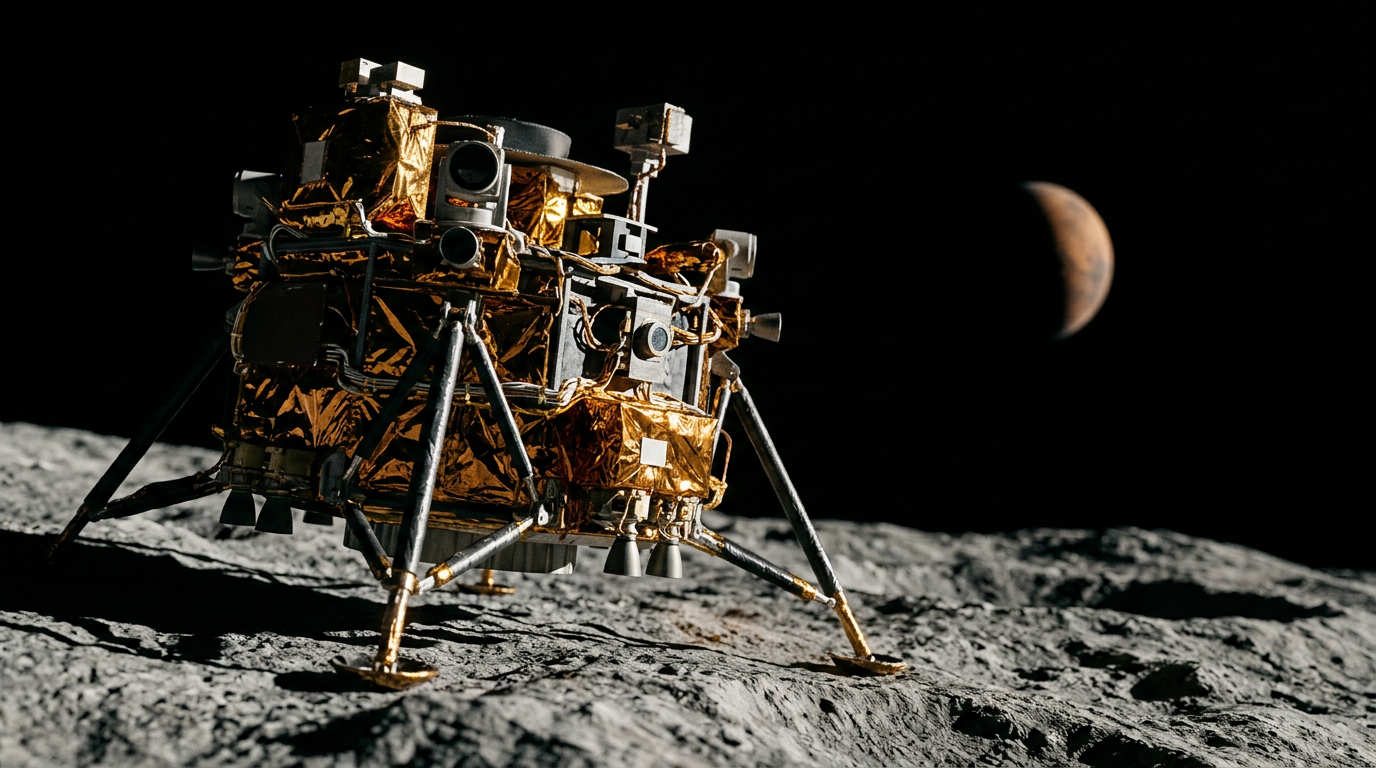
In 2026, SpaceX aims to send one or more uncrewed Starship cargo missions to Mars during the optimal launch window. These flights will be humanity’s first attempt to create a regular, scalable cargo route between Earth and another planet.
The cargo will likely include:
- Modular habitats and life-support prototypes
- Solar panel arrays and power storage systems
- Drilling and excavation tools
- 3D printers for in-situ manufacturing
- Communication and navigation relays
Unlike previous Mars missions, which carried small robotic payloads, Starship’s logistics potential could enable bulk freight delivery — the kind of infrastructure that makes human settlement possible.
Think of Starship as the interplanetary cargo freighter — the first vessel in what may one day be a fleet of ships ferrying goods between worlds.
Cargo Optimization: Every Gram Counts
In interplanetary logistics, efficiency isn’t a goal — it’s survival.
The cost to send 1 kilogram to Mars remains astronomical — though Starship’s reusability is driving it down from tens of thousands to a few hundred dollars per kilogram. That means every cubic centimeter of cargo must earn its place.
NASA, ESA, and private aerospace firms are now adopting advanced cargo optimization algorithms — similar to those used by global shipping and e-commerce companies, but re-engineered for spaceflight.
Key considerations include:
- Volume efficiency: maximizing packing density without damaging delicate equipment.
- Center of gravity management: ensuring spacecraft stability during flight.
- Thermal protection: balancing insulation for electronics and consumables.
- Multi-use payloads: sending materials that can serve more than one purpose.
For instance, polymer-based packaging might double as construction material on Mars, while 3D printers can fabricate spare parts, tools, and even replacement machine components on demand.
These principles mark the dawn of what scientists call “closed-loop logistics” — systems that minimize waste and maximize reusability across missions.
The Role of 3D Printing: Manufacturing on Mars
When the cost of shipping is measured in millions per ton, it’s smarter to make things locally.
That’s why 3D printing — or additive manufacturing — will be at the heart of Mars’ logistics revolution.
NASA’s In-Situ Resource Utilization (ISRU) research has shown that Martian soil (regolith) can be used as raw material for 3D printing structures. Combined with robotic printers, this could enable local production of:
- Spare parts for life-support systems
- Habitat walls using regolith and binding polymers
- Tools and fittings for scientific instruments
In 2026, several Mars missions are expected to carry prototype construction printers and robotic manufacturing arms for testing on the Martian surface.
If successful, this will dramatically reduce future cargo demands. Instead of sending heavy equipment, Earth will send blueprints — and let robots print them on Mars.
This “digital delivery” model represents the ultimate in efficient logistics: exporting data, not mass.
Communication & Coordination: Delay-Tolerant Networking (DTN)
Running a supply chain across 200 million kilometers requires more than rockets — it requires data resilience.
Normal internet or radio communication protocols can’t handle the 5-to-20-minute delay between Earth and Mars. If a signal drops, packets time out. If a system needs instant feedback, it fails.
That’s where Delay-Tolerant Networking (DTN) comes in — a new communication architecture designed specifically for space.
DTN doesn’t rely on continuous connections. Instead, it stores, forwards, and retransmits data packets when conditions allow — much like a cosmic version of email. This ensures messages, instructions, and telemetry eventually reach their destination, no matter how fragmented the link becomes.
NASA has already tested DTN on the International Space Station and plans to integrate it across Mars missions by 2026.
In practical terms, this means that autonomous cargo landers and surface robots can coordinate with Earth even if connections drop — adjusting routes, managing power, or executing backup plans autonomously.
For the first time, Mars logistics can run on semi-independent AI systems — capable of self-managing supply flows and resource allocation.
How Earth’s Logistics Industry Fits In
The idea of “interplanetary shipping” may sound like science fiction, but companies in today’s logistics ecosystem are already watching closely.
Global firms like DHL, UPS, and FedEx have invested in space freight analytics and satellite logistics research, exploring how automation, predictive maintenance, and AI tracking could scale beyond Earth.
Meanwhile, startups such as Astroscale and OrbitFab are developing on-orbit refueling and debris recycling systems — the early infrastructure of space commerce.
In time, these technologies will underpin a multi-planetary logistics chain, where private operators handle everything from satellite servicing to asteroid resource delivery.
Imagine a future where Earth-based logistics networks extend into orbit and beyond — complete with interplanetary “depots,” automated resupply drones, and AI dispatch systems managing cargo routes between planets.
In that sense, 2026 is not just the start of a Mars mission — it’s the prototype year for a new economic frontier.
Energy and Refueling: The Martian “Ports” of Tomorrow
A functioning supply chain needs ports — hubs for refueling, storage, and turnaround.
SpaceX envisions Mars Starship bases that act as both habitats and depots. These sites would extract CO₂ from the Martian atmosphere and convert it into methane fuel using the Sabatier process — enabling local Starship refueling for return trips to Earth.
This model — “live off the land” — is what makes sustained logistics viable.
Instead of bringing all your fuel, you make it where you land.
If proven successful, these fuel depots will serve as interplanetary ports, turning Mars from a distant destination into a resupply point for missions further into the solar system — like the asteroid belt or Jupiter’s moons.
It’s the first blueprint for a solar system trade route, with 2026 as its beginning.
Mars Missions 2026 Challenges on the Road to Mars Logistics
Building a supply chain to another planet is not without risk. Key challenges include:
- Radiation and cargo protection: Prolonged exposure to cosmic rays can degrade sensitive electronics or biological samples.
- Entry, descent, and landing (EDL): Landing large payloads on Mars’ thin atmosphere remains one of aerospace’s hardest problems.
- Autonomy and maintenance: Robots must diagnose and repair themselves without immediate human intervention.
- Cost and scalability: Even with reusable rockets, interplanetary logistics remains capital-intensive.
Despite these hurdles, every innovation — from reusable boosters to 3D-printed habitats — brings the cost and complexity down. Each successful cargo test in 2026 will inform how we build the logistics templates for future Mars bases.
The Broader Impact: From Global Supply Chains to Cosmic Ones
Interestingly, space logistics is feeding back into Earth industries.
NASA and private companies are adapting their space supply algorithms to improve Earth-based logistics — from disaster relief to remote healthcare delivery.
The same principles that guide cargo optimization on Mars can help design more resilient global networks here at home — capable of surviving disruptions like pandemics, wars, or climate disasters.
In other words, Mars logistics may make Earth logistics smarter, cleaner, and more adaptive.
The Human Factor: From Exploration to Infrastructure
When humans finally arrive on Mars — perhaps in the early 2030s — they’ll step into a world already partially built by logistics.
The habitats will be prefabricated, the systems pre-tested, and the supply networks already humming.
In a sense, the first human colonists will not be explorers but operators — managing a living, breathing supply chain stretched across space.
Mars will become not just a scientific outpost, but a logistics hub — the first node in a multi-planetary network of commerce, energy, and knowledge.
And it all begins with the 2026 missions — humanity’s first great attempt to deliver reliably across the void.
Conclusion
In 2026, the first interplanetary supply chain begins to take shape — one rocket, one relay, one robot at a time.
It represents a new intersection of industries: aerospace, AI, energy, and logistics — converging toward a shared vision of sustainable exploration.
It also reflects a timeless truth: progress depends on connection. From ancient trade routes to orbital cargo ships, every leap forward in civilization has started with improving how we move things — and people — from one place to another.
As Mattias Knutsson, Strategic Leader in Global Procurement and Business Development, insightfully notes:
“What we’re seeing with Mars logistics is the natural evolution of human enterprise. Whether you’re shipping across continents or across planets, success will always depend on how well we align technology, timing, and trust.”
2026 isn’t just a year on the calendar. It’s the moment humanity builds the first bridge between worlds — one shipment at a time.