Summary
The lunar south pole has become one of the most strategically important destinations in modern space exploration. Unlike the Apollo missions that focused on equatorial landing sites, current and future lunar programs are increasingly focused on the Moon’s polar regions because they offer a combination of scientific value, environmental stability, and resource potential that could support long-term human presence. The region is believed to contain water ice trapped inside permanently shadowed craters, while nearby high ridges may receive near-continuous sunlight, creating a rare balance of resources essential for sustained exploration.
NASA’s Artemis III mission, along with international partners and private space companies, is preparing to send astronauts to this region for the first time in human history. This is not simply another lunar landing; it is a foundational step toward establishing a long-term human presence beyond Earth and preparing for future missions to Mars and deeper space destinations. The south pole is increasingly seen as a strategic “gateway zone” where science, technology, and exploration converge.
Key Takeaways
The lunar south pole is believed to contain water ice in permanently shadowed craters that could support future human missions. NASA’s Artemis III mission is targeting this region as part of its return to the Moon. The presence of water ice could enable drinking water, oxygen production, and rocket fuel creation, reducing dependence on Earth-based supply chains. Certain elevated areas near the south pole receive extended sunlight, making them ideal for solar energy systems. The region offers unique scientific opportunities to study the early solar system and lunar evolution. Multiple countries and private companies are now competing to explore and utilize this region. The lunar south pole may become the foundation for future Moon bases and deep space exploration infrastructure.
The lunar south pole is considered the next giant leap in human exploration because it contains essential resources like water ice, stable sunlight conditions for energy production, and scientifically valuable terrain that can support long-term missions. These characteristics make it the most suitable region on the Moon for building sustainable human operations and preparing for future exploration of Mars and beyond.
Why Is the Lunar South Pole Suddenly So Important?
For much of the early space age, lunar exploration focused on equatorial regions because they were easier to reach and safer to land on with the technology available during the Apollo era. Those missions prioritized flat terrain, predictable lighting conditions, and minimal operational risk. However, modern space exploration has shifted its focus from short-term visits to long-term sustainability. This change in philosophy has completely transformed the way scientists and engineers evaluate potential landing sites.
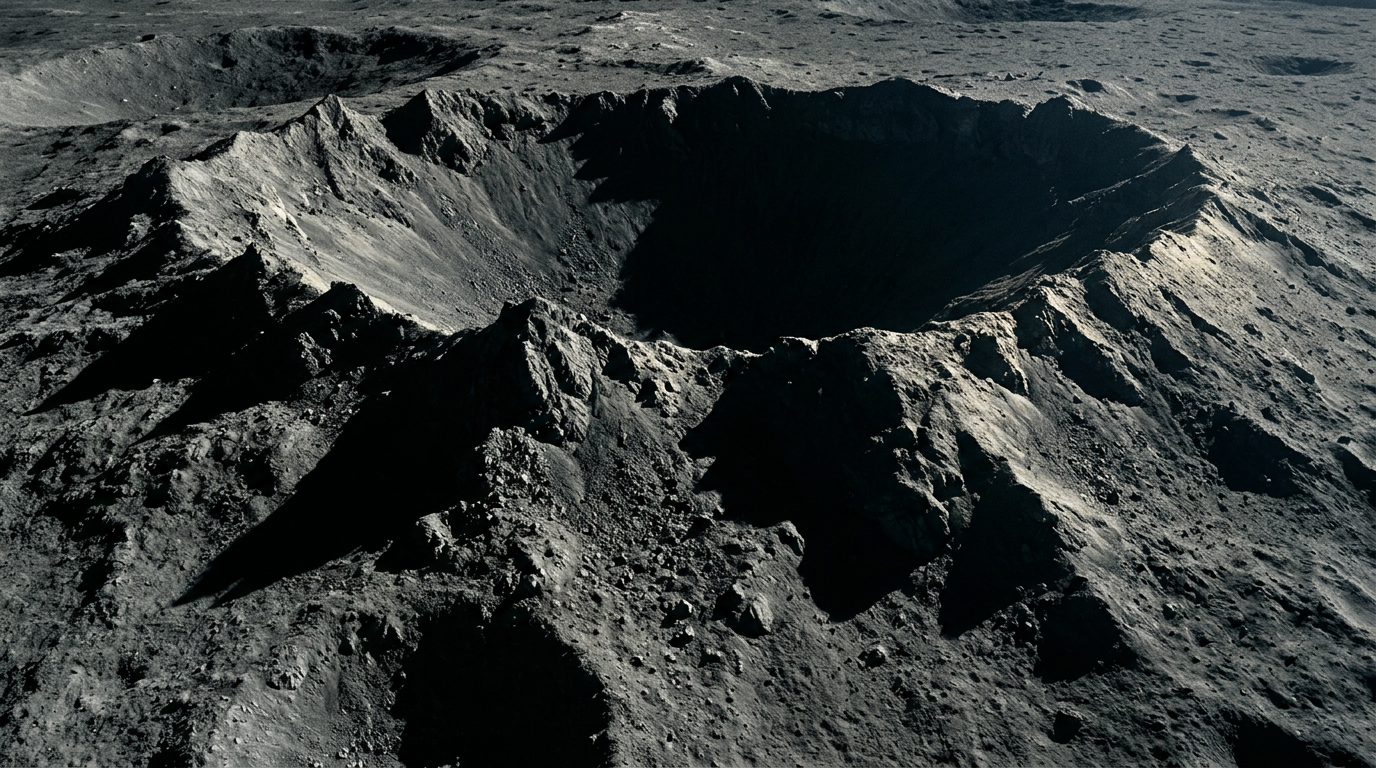
The lunar south pole gained attention after orbital missions revealed that certain craters never receive sunlight and remain in permanent darkness. These areas are extremely cold and may have preserved water ice for billions of years. At the same time, nearby elevated regions receive extended periods of sunlight, creating a unique environment where energy generation and resource extraction can potentially coexist. This combination does not exist anywhere else on the Moon in such a balanced form.
As exploration goals evolve toward building permanent infrastructure, these environmental conditions become extremely valuable. Instead of simply landing, collecting samples, and returning to Earth, future missions aim to stay longer, operate independently, and gradually build systems that support sustained human presence. The south pole fits naturally into this new vision of space exploration.
What Makes the Lunar South Pole Different From Other Lunar Regions?
The lunar south pole is fundamentally different from equatorial regions due to the Moon’s axial tilt and resulting lighting conditions. While most of the lunar surface experiences long cycles of sunlight and darkness, polar regions contain areas of permanent shadow and near-constant illumination depending on elevation. This creates a highly unusual environment where extreme cold and continuous light exist in close proximity.
These permanently shadowed regions are especially significant because they act as natural cold traps. Over billions of years, they may have accumulated volatile materials, including water molecules delivered by comets or solar wind interactions. Because these areas never receive direct sunlight, the trapped materials remain stable and preserved, making them highly valuable for scientific study and potential resource utilization.
At the same time, nearby ridges and elevated terrain can receive long durations of sunlight, which is critical for solar energy systems. This allows for a potential balance between resource extraction zones and energy generation zones within a relatively small geographical area. Such a configuration is ideal for establishing early lunar infrastructure.
Environmental Characteristics of the Lunar South Pole
| Feature | Significance |
|---|---|
| Permanently Shadowed Craters | Potential long-term preservation of water ice |
| Extended Sunlight Regions | Reliable solar energy generation |
| Extreme Temperature Variation | Scientific value for planetary studies |
| Rugged Terrain | Challenges and opportunities for exploration technology |
| Volatile-Rich Areas | Potential for fuel and life support resources |
Why Is Water Ice So Critical for Future Space Missions?
Water is one of the most important resources in space exploration because it directly supports human survival and can also be converted into other essential materials. If astronauts can access water ice on the Moon, they can produce drinking water, oxygen for breathing, and hydrogen fuel for rockets. This transforms the Moon from a destination that requires constant resupply from Earth into a potential self-sustaining outpost.
Transporting water from Earth is extremely expensive and inefficient due to launch costs and payload limitations. Even small amounts of cargo significantly increase mission complexity and expense. The ability to use local water resources would dramatically reduce these constraints and enable longer and more ambitious missions.
Beyond immediate survival, water ice also enables the concept of fuel production directly on the lunar surface. By splitting water molecules into hydrogen and oxygen, future missions could generate rocket fuel on-site. This capability could turn the Moon into a refueling station for deeper space missions, including journeys to Mars.
Uses of Lunar Water Ice
| Resource Use | Space Mission Benefit |
|---|---|
| Drinking Water | Sustains human life |
| Oxygen Production | Enables breathable atmosphere |
| Hydrogen Fuel | Supports rocket propulsion |
| Radiation Shielding | Protects astronauts and habitats |
| Industrial Processing | Enables future lunar manufacturing |
How Will Artemis III Explore the Lunar South Pole?
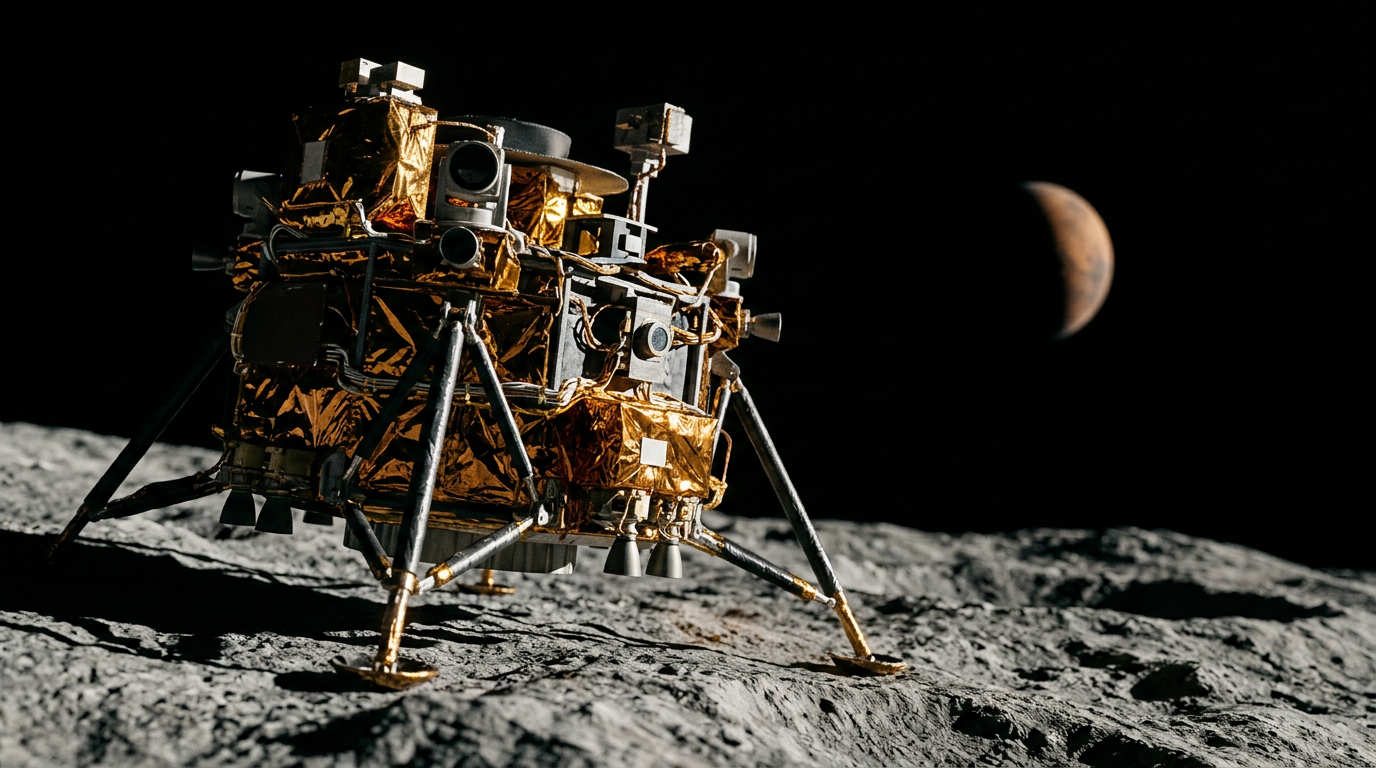
NASA’s Artemis III mission is designed to mark humanity’s first return to the lunar surface in more than fifty years and will specifically target the Moon’s south pole. Unlike Apollo missions, which focused on short-duration exploration, Artemis III represents a shift toward preparing for sustained lunar presence and future deep space missions.
Astronauts will conduct surface exploration, collect geological samples, and study the physical properties of the polar terrain. A major focus of the mission will be investigating the presence, distribution, and accessibility of water ice. Understanding how much water exists and how it can be extracted is essential for future infrastructure planning.
The mission will also test advanced technologies required for long-term lunar operations, including navigation systems, mobility platforms, communication tools, and survival equipment designed for extreme polar conditions. These systems are essential for future missions that aim to establish permanent lunar bases.
Artemis III Objectives at the South Pole
| Objective | Purpose |
|---|---|
| Surface Exploration | Geological analysis of lunar terrain |
| Water Ice Study | Evaluate resource availability |
| Technology Testing | Validate future mission systems |
| Site Selection | Identify base construction zones |
| Operational Trials | Prepare for long-duration missions |
Why Is the Lunar South Pole Important for Mars Exploration?
The Moon is increasingly viewed as a training ground for Mars missions. While Mars is far more complex due to its atmosphere, distance, and environmental conditions, the Moon provides a nearby environment where technologies and strategies can be tested safely.
The lunar south pole offers an ideal testing ground for systems such as resource extraction, habitat construction, radiation protection, and autonomous operations. These are all critical capabilities needed for Mars missions, where astronauts will need to rely heavily on local resources and operate with limited communication with Earth.
By successfully operating in the harsh conditions of the lunar south pole, space agencies can gain valuable experience that reduces risks associated with future interplanetary missions.
Moon to Mars Preparation Link
| Lunar Capability | Mars Application |
|---|---|
| Water Extraction | Resource independence |
| Habitat Systems | Long-term human survival |
| Radiation Protection | Deep space safety |
| Surface Mobility | Planetary exploration |
| Autonomous Systems | Reduced Earth dependence |
Who Is Competing for the Lunar South Pole?
The lunar south pole has become a focal point of international space competition and collaboration. NASA remains a leading force through its Artemis program, but other space agencies and private companies are also heavily invested in exploring and potentially utilizing this region.
Countries such as China, India, Japan, and members of the European Space Agency are developing their own lunar missions with an increasing focus on polar exploration. At the same time, private companies are advancing technologies that support landing systems, lunar transport, and infrastructure development.
This new era of exploration is no longer defined purely by competition. Instead, it involves a complex mix of rivalry and collaboration, where shared scientific goals coexist with national and commercial interests.
What Scientific Discoveries Could the South Pole Reveal?
The lunar south pole is expected to provide some of the most valuable scientific insights ever obtained from the Moon. Because certain regions have remained untouched by sunlight for billions of years, they act as natural time capsules preserving ancient materials.
Scientists hope to study lunar ice composition, solar wind interactions, impact crater history, and the chemical evolution of the lunar surface. These discoveries could help answer fundamental questions about the formation of the Moon and the early solar system.
The region may also reveal how water and other volatile compounds arrived on the Moon, offering insights into broader planetary formation processes.
Scientific Research Potential
| Research Area | Potential Discovery |
|---|---|
| Lunar Ice Composition | Origin of water on the Moon |
| Impact Craters | Solar system history |
| Polar Chemistry | Volatile preservation patterns |
| Solar Wind Effects | Early Sun behavior |
| Geological Layers | Moon formation insights |
What Challenges Exist at the Lunar South Pole?
Despite its enormous potential, the lunar south pole presents extreme challenges. Temperatures in permanently shadowed regions can drop below minus 230 degrees Celsius, creating one of the coldest environments in the solar system. The terrain is rugged, with steep slopes and deep craters that make landing and movement difficult.
Lighting conditions also present navigation challenges because shadows can be long and unpredictable. Communication systems may face limitations due to terrain obstruction, and lunar dust poses additional risks to equipment and human health.
Overcoming these challenges requires advanced robotics, autonomous systems, improved spacecraft design, and highly specialized astronaut equipment.
Could Humans Build Permanent Settlements There?
Long-term human settlement on the Moon is no longer considered science fiction. Instead, it is a serious area of planning and research. The lunar south pole is one of the most likely locations for early lunar bases due to its resource availability and energy potential.
Future infrastructure could include research stations, habitat modules, mining operations, fuel production facilities, and communication hubs. Over time, these systems could evolve into a fully functional lunar ecosystem supporting continuous human presence.
Future Lunar Infrastructure Possibilities
| Infrastructure Type | Purpose |
|---|---|
| Research Stations | Scientific exploration |
| Habitats | Long-term human living |
| Fuel Plants | Rocket refueling |
| Mining Systems | Resource extraction |
| Communication Hubs | Deep space connectivity |
How Does the Lunar South Pole Impact the Global Economy?
Lunar exploration is increasingly influencing global economic systems through technological innovation, industrial growth, and international investment. The development of lunar missions drives demand in aerospace engineering, robotics, artificial intelligence, and advanced materials.
The Artemis program alone supports thousands of jobs across multiple sectors and countries. As lunar exploration expands, it is expected to create entirely new industries focused on space infrastructure, resource utilization, and off-world logistics.
Why Does the Lunar South Pole Matter to Everyday Life?
Although lunar exploration may seem distant from daily concerns, space programs have historically produced technologies that transform everyday life. Satellite communications, GPS systems, weather forecasting, and medical imaging all originated from space research programs.
Future lunar missions could accelerate innovation in renewable energy, robotics, artificial intelligence, and sustainable engineering. Beyond technology, these missions also serve as a powerful symbol of human curiosity and cooperation.
FAQ
1. Why is the lunar south pole so important for NASA?
It is important because it may contain water ice and provides unique lighting conditions that support long-term exploration and potential Moon bases.
2. Has water really been found on the Moon?
Yes, scientific missions have confirmed the presence of water ice in permanently shadowed regions near the lunar poles.
3. Why didn’t Apollo missions go to the south pole?
Apollo missions prioritized safer, flatter equatorial regions because they were easier to land on with older technology.
4. Can lunar water be used for fuel?
Yes, water can be split into hydrogen and oxygen, which can be used as rocket fuel.
5. Will humans live on the Moon someday?
It is possible. Many space agencies are actively planning for long-term lunar habitats, especially near the south pole.
Conclusion
The lunar south pole represents one of the most important frontiers in modern human exploration. It is no longer viewed simply as a distant region of the Moon, but as a potential foundation for sustainable space operations. With its combination of water ice, solar energy potential, and scientific value, it offers the essential ingredients needed for long-term human presence beyond Earth.
NASA’s Artemis III mission is the first major step toward unlocking this potential. If successful, it will not only return humans to the Moon but also redefine the future of exploration itself, transforming the lunar surface into a working platform for science, industry, and interplanetary travel.
As humanity prepares for this next phase, the lunar south pole stands as a symbol of what is possible when science, technology, and global cooperation come together.