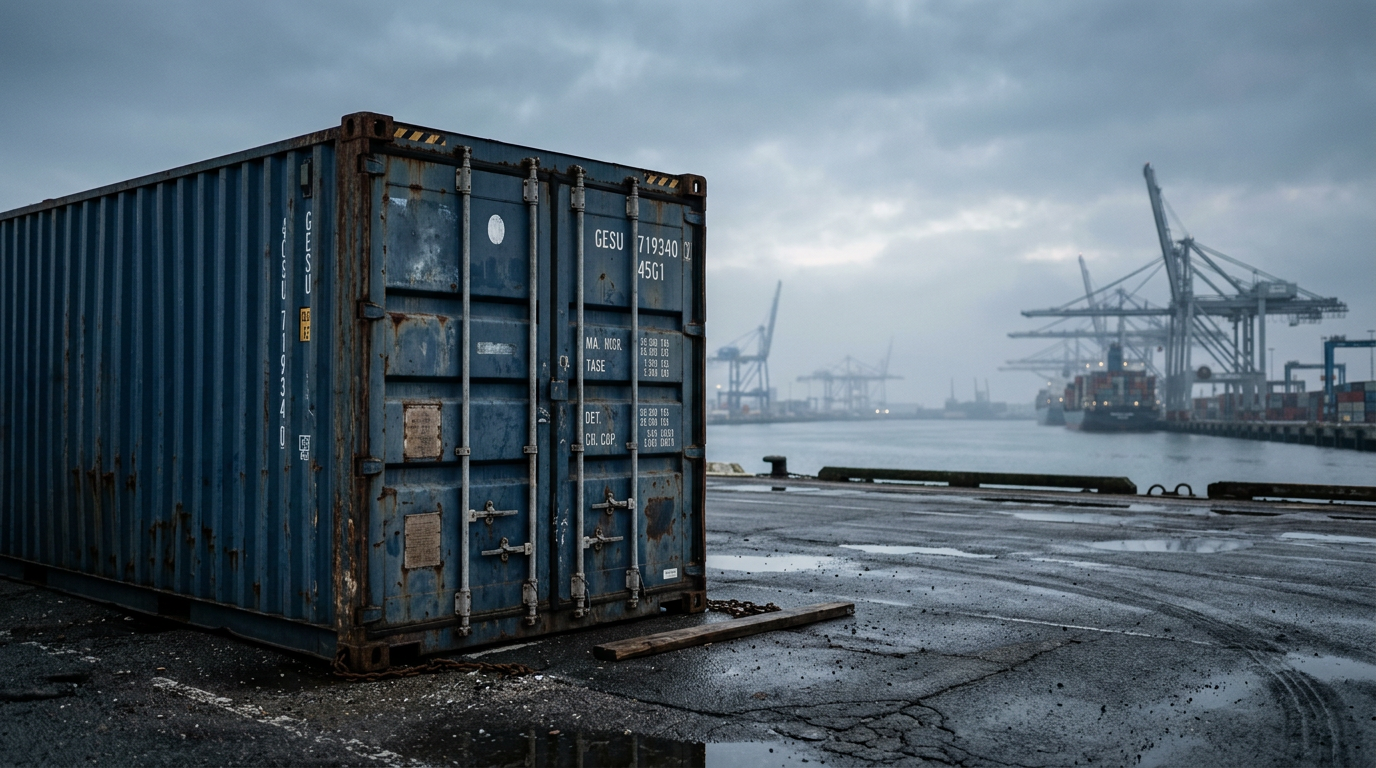
The year 2026 stands as a defining moment for global trade. After months of anticipation and heated debate, President Trump’s delayed tariff escalations are now set to take full effect. What began in 2025 as a series of policy announcements and phased adjustments is transitioning into tangible economic impact. As Trump’s delayed tariff escalations take full effect on January 1, 2026, global U.S. Trade Year faces a critical test. Explore how these rising rates, legal challenges, and inflationary pressures could redefine the economic balance in 2026.
From furniture and cabinetry imports to advanced manufacturing components, new tariff rates are scheduled to surge starting January 1, 2026 — a date already being referred to by some economists as “Tariff Day.” These delayed escalations mark not only the operational phase of Trump’s trade vision but also the moment when theories meet real-world consequences.
While the administration maintains that these measures will protect U.S. industries and jobs, analysts warn of higher inflation, slower growth, and legal uncertainty as the world adjusts to America’s more muscular trade posture.
In this analysis, we explore how 2026 is shaping up as the true test year for Trump’s economic experiment — unpacking the implications for businesses, consumers, and global markets, and reflecting on what strategic leaders like Mattias Knutsson see as the next evolution in procurement resilience.
The Countdown to January 1, 2026
Throughout 2025, tariff announcements often came with delayed enforcement dates — a strategy designed to give industries and importers time to prepare. But that grace period is rapidly closing.
January 1, 2026 marks the “kick-in” point for several categories that have thus far enjoyed transitional relief. Among the most notable are:
- Furniture and cabinetry, two sectors heavily reliant on imports from Asia, particularly Vietnam, Malaysia, and China.
- Appliances and household goods, facing stepped-up duties to encourage domestic assembly.
- Industrial components and metal fittings, where rates are set to double or triple from 2025 levels.
For American importers, this means previously manageable tariff costs could balloon overnight. For exporters abroad, it’s a signal that access to the U.S. market will come at a steeper price — unless trade concessions are reached.
Behind these adjustments is Trump’s stated goal of rebalancing global trade, which his administration argues has for decades undermined domestic production. Yet, the timing — coinciding with a still-recovering global economy — is stirring unease among economists.
Inflation and Growth: The Economic Crossroads
Modelling from independent economic institutes and trade associations suggests a mixed but measurable macroeconomic impact from the 2026 tariff wave.
Early estimates indicate that the full enforcement could raise U.S. inflation by 0.4% to 0.7% through the year — modest at first glance but significant in an economy already wrestling with elevated price pressures. The U.S. GDP growth rate, meanwhile, could dip by 0.3 to 0.5 percentage points, as higher input costs ripple across manufacturing and retail sectors.
For consumers, the effects may be most visible in home goods, furniture, and renovation materials, which have already faced supply bottlenecks. Retailers warn that cost pass-throughs could make home improvement projects and durable goods meaningfully more expensive in 2026.
Yet for certain industries, there’s an upside. Domestic producers of aluminum frames, plywood, and steel hardware are seeing rising orders, as import alternatives become less competitive.
The economic equation, in short, is shifting — not toward collapse, but toward controlled disruption. Trump’s team argues that short-term inflationary pain will lead to long-term production revival. Whether that balance holds remains the question of 2026.
The Legal and Global Pushback
While tariffs dominate headlines, an equally significant story is unfolding in the background — one of legal challenges and international pushback.
Several of the 2025-announced tariffs, especially those invoking national security (Section 232) or reciprocity doctrines, are now facing scrutiny in both U.S. courts and the World Trade Organization (WTO).
- The European Union has filed complaints arguing that reciprocal tariffs violate Most-Favored-Nation (MFN) principles.
- Asian economies, led by South Korea and Vietnam, have sought WTO consultations to challenge the fairness of delayed escalations.
- U.S. import associations representing furniture and home goods industries are lobbying Congress to review the economic impact and potentially reinstate tariff exemptions.
Legal analysts note that the judicial timeline could overlap with the economic rollout — meaning businesses might face months of regulatory ambiguity. This uncertainty complicates planning for importers who must decide whether to pre-purchase inventory or wait for rulings that could reduce duties later in 2026.
U.S. Trade Year of Adjustment for Global Supply Chains
If 2025 was the year of preparation, 2026 is the year of adaptation. Across continents, companies are reconfiguring sourcing models, diversifying supplier bases, and shifting logistics strategies to mitigate exposure to the U.S. tariff web.
Vietnam, once the big winner of the U.S.-China trade war, now faces new scrutiny as its export categories are swept into the 2026 escalation. As a result, Mexico and Eastern Europe are emerging as preferred alternatives for manufacturing relocation.
Meanwhile, U.S. importers are turning to tariff engineering — subtly redesigning or reclassifying products to qualify for lower duty brackets. Some are even exploring shared production models, combining domestic assembly with imported components to maintain competitiveness.
In short, global procurement is becoming smarter, leaner, and more resilient, though not without cost. Logistics experts describe 2026 as “a recalibration year” — one that could redefine global sourcing norms for the next decade.
Consumer Realities and Market Sentiment
For the average American consumer, the 2026 tariff shift may first appear as a slow uptick in prices, but its emotional and psychological weight could be larger.
Homebuilders, furniture retailers, and home renovation chains have already warned of 5–15% price increases in early 2026. The sentiment in markets like housing and consumer goods remains cautious, with buyers delaying purchases in anticipation of volatility.
Wall Street, however, is less alarmed. Equity analysts expect short-term inflation volatility but view the overall 2026 tariff environment as part of a broader trend toward industrial reshoring — a potential long-term positive for American manufacturing stocks.
Still, the divergence between investor optimism and consumer strain could define the narrative of 2026.
The Global Political Chessboard
The enforcement of 2026 tariffs doesn’t exist in an economic vacuum — it’s part of a larger geopolitical contest. By delaying major hikes until now, the U.S. has positioned itself for strategic leverage heading into a year of global political transitions, including leadership changes in key trade partners.
Countries like China and India are expected to counterbalance U.S. measures through regional alliances and increased participation in frameworks such as RCEP (Regional Comprehensive Economic Partnership). Meanwhile, Europe is quietly preparing retaliatory tariff lists, should U.S. actions escalate further.
In effect, 2026 could mark the pivot from trade skirmishes to full-scale policy realignments, setting the tone for a decade where trade agreements become fluid and more closely tied to geopolitical loyalty than economic logic.
Navigating U.S. Trade Year 2026: A Business and Policy Imperative
For corporate leaders, the key to surviving 2026 lies not in resistance, but in readiness. Strategic planning now involves building tariff resilience into the DNA of procurement and production.
Forward-looking companies are already:
- Incorporating tariff-risk analytics into sourcing and pricing models.
- Reassessing regional manufacturing strategies with an eye on flexibility.
- Engaging in direct dialogues with trade policy advisors to anticipate next-stage enforcement or exemptions.
The era of passive adaptation is over. 2026 rewards those who can anticipate rather than merely react.
Conclusion
The delayed tariff escalations taking effect in early 2026 are more than just economic adjustments — they mark a philosophical shift in how the U.S. engages with the world. With inflationary ripples, trade disputes, and global legal challenges all converging, this year stands as a proving ground for Trump’s assertion that “economic strength is national strength.”
While uncertainty clouds the immediate horizon, the business world is learning to transform volatility into strategy. From retooled supply chains to adaptive pricing models, resilience is becoming the new competitive edge.
As Mattias Knutsson, Strategic Leader in Global Procurement and Business Development, aptly reflects:
“Trade policies will always fluctuate, but the mindset of preparedness is permanent. 2026 is the year where resilience becomes a core competency — not an afterthought.”
In the grand chessboard of global trade, 2026 is no longer a waiting game. It’s the year where nations, industries, and businesses alike discover whether they can thrive amid the world’s new rules of exchange.