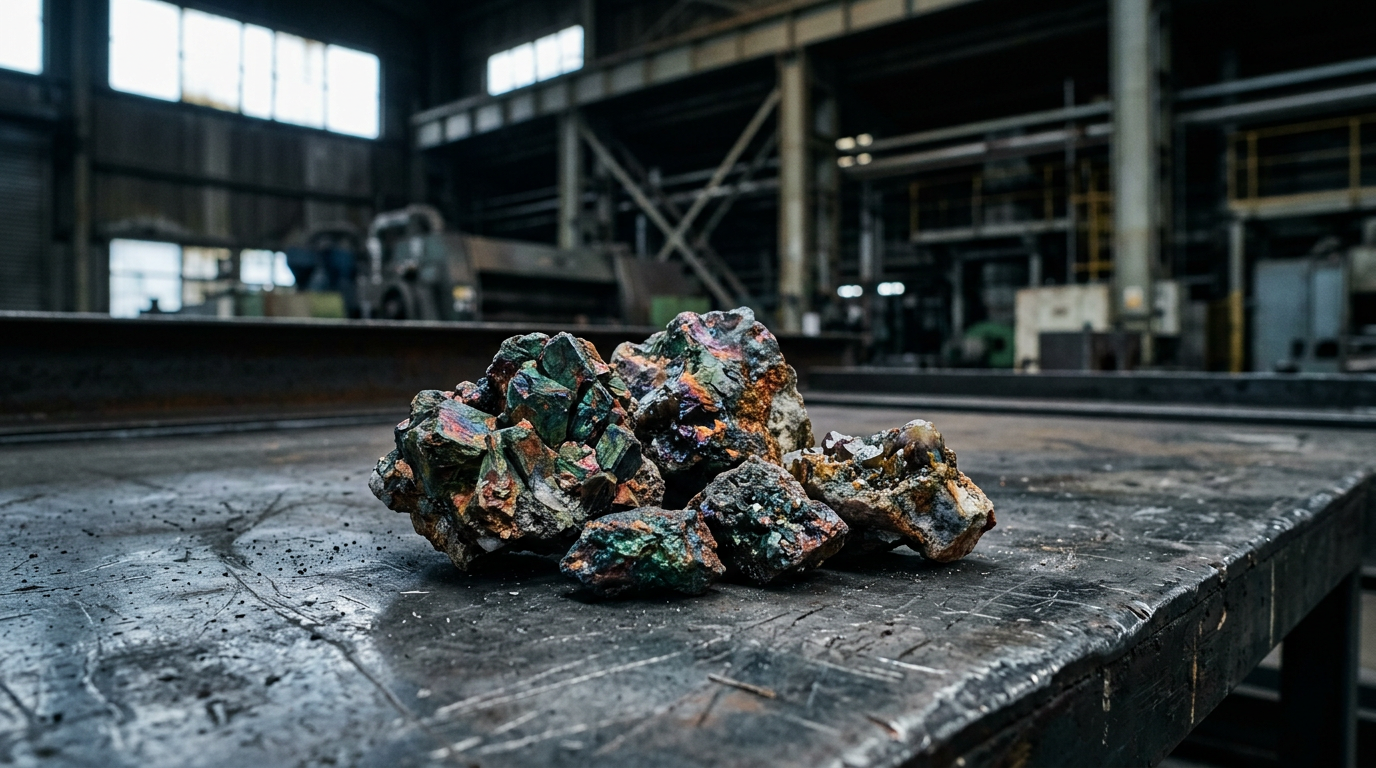
In 2026, the question of whether tariffs on rare earth imports could jeopardize U.S. military supply chains is no longer theoretical. It is an urgent reality that policymakers, investors, and defense officials are grappling with. Rare earth elements (REEs) are the invisible enablers of American military superiority. They are embedded in precision-guided munitions, fighter jet engines, naval radar systems, satellites, and advanced communications. Without them, the U.S. defense machine would grind to a halt. As U.S. tariffs escalate and REE face new restrictions, defense supply chains may be at risk. Explore how military readiness depends on critical minerals and where solutions may emerge by 2026.
Yet America remains overwhelmingly dependent on foreign suppliers — and China, which controls nearly 60% of rare earth mining and close to 85% of refining capacity worldwide, sits at the center of this strategic vulnerability. Now, with tariffs on REE imports rising under U.S. trade policy and Beijing countering with export restrictions, the Pentagon’s supply chains are in a precarious balancing act.
This blog explores how tariffs could affect U.S. military preparedness, where risks lie, and whether new supply sources in North America, Africa, and Latin America might mitigate the looming threats.
The Critical Role of REE in U.S. Tariffs Defense
The U.S. Department of Defense has repeatedly classified REEs as “essential for national defense.” They power the permanent magnets in F-35 fighter jets, the guidance systems in Tomahawk cruise missiles, sonar on nuclear submarines, and lasers for missile defense. Without dysprosium, neodymium, terbium, and yttrium, advanced weapons lose reliability and precision.
In 2022, a Government Accountability Office (GAO) report warned that nearly 70% of rare earth components used in major U.S. defense platforms were sourced directly or indirectly from China. By 2025, the DoD estimated that China supplied over 80% of the rare earth magnets in active U.S. weapons systems.
This dependency has raised alarms across the Pentagon, with military strategists warning that “a supply shock in rare earths is not an economic inconvenience, it is a direct threat to national security.”
REE Tariffs and Counter-Moves: A Dangerous Cycle
The Trump administration’s new tariff packages, initiated in late 2025, targeted a broader spectrum of critical minerals, including select REE oxides and magnets. The aim was to accelerate domestic production, reduce reliance on Chinese imports, and create leverage in trade negotiations.
Yet tariffs come with a paradox: while they may encourage local industry, in the short term they increase costs for U.S. manufacturers — including defense contractors like Lockheed Martin, Raytheon, and Northrop Grumman. Industry insiders estimate that tariffs have already raised the cost of neodymium magnets by 15–20% in defense procurement contracts.
Meanwhile, Beijing has flexed its counter-leverage. In September 2025, Chinese regulators announced “export controls” on dysprosium and terbium, two heavy rare earths critical for high-temperature military applications. The move echoed China’s 2010 strategy against Japan, when rare earth exports were cut off during a territorial dispute.
Such tit-for-tat measures suggest a dangerous cycle: tariffs from Washington raise costs at home, while restrictions from Beijing tighten supply abroad. For U.S. defense contractors, this translates into rising costs, potential delivery delays, and a scramble to secure substitutes or recycled materials.
Military Readiness Under Stress
The defense sector is uniquely exposed to REE volatility because many of these minerals have no easy substitutes. If supply chains tighten further, potential consequences include:
- Production Delays: F-35 jet output could slow if magnet shortages extend beyond six months. A Pentagon procurement report in 2025 flagged “magnet bottlenecks” as the single largest vulnerability in the program.
- Cost Inflation: Tariffs and scarcity could raise the cost of advanced missile systems by up to 10%, straining already tight budgets.
- Strategic Vulnerability: A prolonged supply squeeze could force rationing of REE-intensive systems, weakening U.S. readiness in a crisis.
In short, the combination of tariffs and foreign restrictions risks creating precisely the kind of chokepoint adversaries may seek to exploit.
Searching for Alternatives: Domestic and Global
Recognizing the stakes, the U.S. government has poured billions into alternative sources. In 2025, the Pentagon took a direct equity stake in MP Materials, the only U.S. company currently mining and processing rare earths at scale. The Department of Defense also committed more than $300 million to establish domestic magnet production facilities in Texas and California.
Outside the U.S., allies are becoming crucial. Australia’s Lynas Rare Earths has signed expanded contracts with the Pentagon, while Canada and Brazil are advancing REE exploration projects. Africa, too, is emerging as a potential pillar: Malawi, Tanzania, and Burundi hold promising deposits, while South Africa is advancing new processing partnerships with Western firms.
Latin America, meanwhile, is attracting growing attention. Brazil’s Araxá deposit and Argentina’s nascent rare earth projects are drawing investment, supported by local governments eager to position themselves as strategic suppliers to NATO countries.
But scaling these projects takes time. It may take three to five years before many are producing at meaningful levels — leaving a critical gap in near-term defense readiness.
Recycling and Substitution Efforts
Another area of focus is recycling and “urban mining.” The Pentagon has backed pilot projects to recover rare earth magnets from decommissioned weapons systems and electronic waste. While promising, recycling volumes remain small — covering less than 5% of U.S. annual REE demand.
Researchers are also exploring substitutes, such as ferrite magnets, for certain applications. But in high-performance defense technologies, substitutes often fail to match the thermal stability and magnetic strength of REEs.
Thus, while these innovations may help in the long run, they cannot yet offset the strategic risks tariffs are amplifying.
Market Reactions and Investor Signals
Financial markets have begun to price in defense-sector REE vulnerabilities. Shares of MP Materials surged by over 50% in July 2025 after the DoD expanded its investment. Lynas stock also rose nearly 12% in mid-2025 following China’s export restrictions. ETFs like the VanEck Rare Earth/Strategic Metals ETF (REMX) have attracted fresh inflows, though their performance remains uneven due to heavy China exposure.
For investors, the tariff-driven environment is double-edged: risk and volatility are high, but so is the potential upside for companies positioned to serve defense needs outside China’s reach.
Conclusion
The intersection of REE tariffs and U.S. military supply chains illustrates the complex web of national security and global economics. While tariffs aim to accelerate domestic capability, in the short term they may strain defense procurement, inflate costs, and risk bottlenecks in critical weapons systems. Until alternative sources in North America, Africa, and Latin America come online at scale, vulnerabilities will persist.
For the Pentagon, this means balancing immediate readiness with long-term supply chain resilience. For investors, it suggests a market defined by both risk and opportunity, as policy, geopolitics, and technology collide.
As Mattias Knutsson, Strategic Leader in Global Procurement and Business Development, has observed in his commentary, resilience requires more than short-term fixes. It demands diversified partnerships, steady investment in capacity, and a recognition that the cheapest supply is rarely the most secure. That perspective may well guide the U.S. defense establishment — and investors — through this critical transition period.