
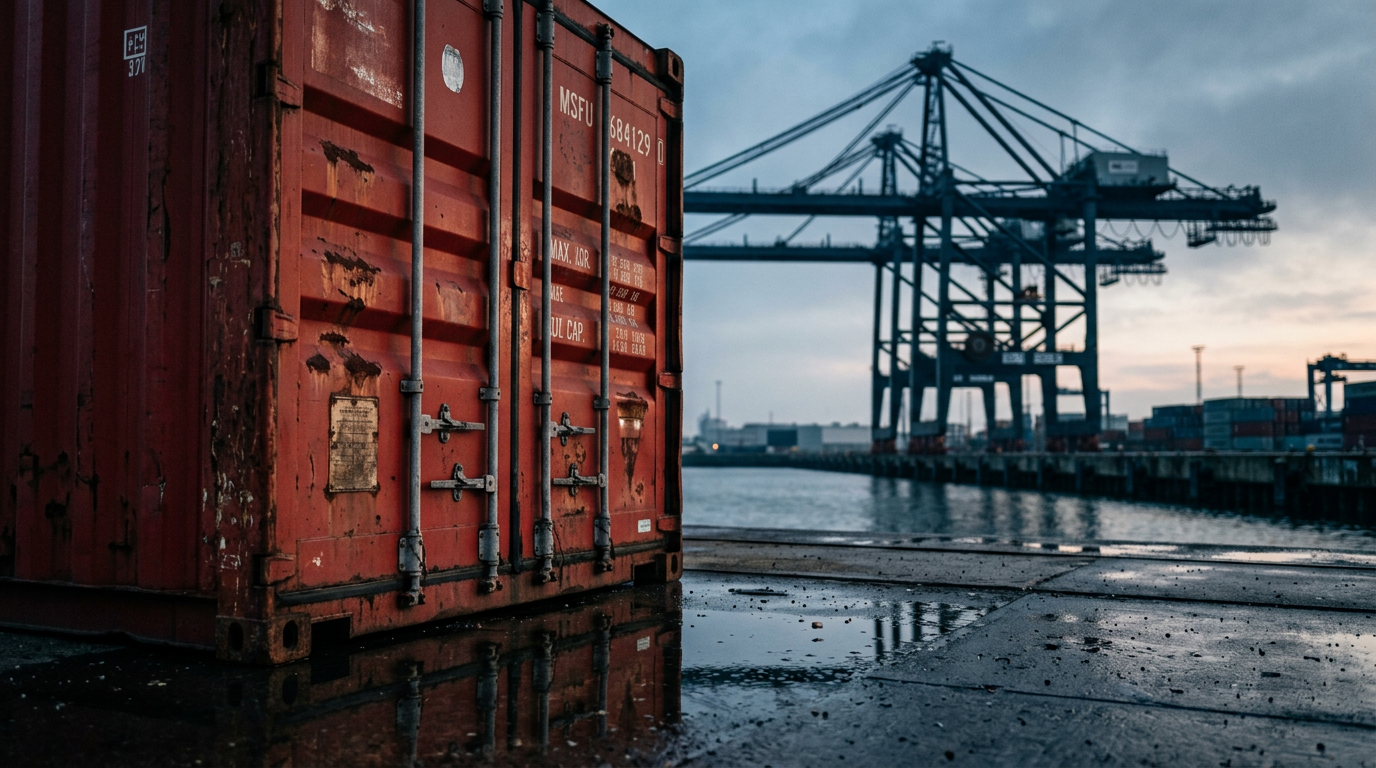
The world enters 2026 standing at the crossroads of a new trade era. What began in 2025 as a heated tariff storm under President Donald Trump has now evolved into a full-scale restructuring of how the United States interacts with global markets. From steel and aluminum to wood, furniture, and energy, nearly every major import sector has been touched by the Trump administration’s sweeping trade agenda. Explore the latest tariff announcements from Donald Trump as 2026 begins. Understand how the new trade policies, baseline tariffs, and reciprocal duties are shaping global supply chains, inflation, and procurement strategies.
The message is unmistakable — America’s trade policy has shifted from free-trade diplomacy to economic nationalism on a scale not seen in decades. Trump’s vision, branded as “Liberation Day” in early 2025, set the stage for a universal 10% baseline tariff on all imported goods. But the year ahead, 2026, marks the deepening phase — with reciprocal tariffs, sector-specific hikes, and new enforcement rules designed to rebalance trade in America’s favor.
For businesses, consumers, and global partners alike, the implications are vast. Prices, supply chains, and investment strategies are being recalculated in real time. Economists are already warning of ripple effects — from inflation to slowing growth — while procurement leaders are scrambling to build resilience in a more fragmented global system.
This is the story of how Trump’s 2026 tariff plan is redefining global trade — who gains, who loses, and how industries must adapt in the year ahead.
The Trump 2026 Tariff Landscape: From Policy to Power
The Trump administration’s new trade doctrine centers around one simple idea: “America First — at the Border.”
Under this policy, tariffs are no longer seen as temporary bargaining tools; they’re the new normal — a permanent feature of America’s trade identity. The baseline 10% tariff introduced in 2025 now acts as a foundation, while 2026 ushers in an era of escalating, targeted tariffs that reflect each nation’s trade balance with the U.S.
Countries running large trade surpluses, such as China, Germany, and Mexico, face steeper penalties — in some cases, reciprocal rates of up to 50%. These measures are framed as necessary corrections to what Trump has repeatedly called “decades of unfair trade deals.”
From the White House’s perspective, tariffs are leverage — designed to pressure trading partners into renegotiating deals that better serve U.S. interests. But in practice, they’ve also become a broad fiscal instrument, pulling billions of dollars into federal coffers and reshaping cost structures across nearly every industry.
The Big Announcements for 2026
Baseline and Reciprocal Tariffs
Starting January 2026, the universal 10% import tariff remains in effect for all goods entering the U.S., regardless of origin. But the second phase — reciprocal tariffs — will now apply to about 60 countries. Nations with high import barriers or significant trade surpluses face surcharges ranging from 20% to 50%, depending on the category of goods.
For example:
- Products from China, South Korea, and Germany are among those slated for higher rates due to “unbalanced” trade deficits.
- U.S. importers will pay elevated duties unless reciprocal agreements are reached — effectively turning tariff reductions into a reward for compliance.
Economists estimate that the average U.S. tariff rate could climb to more than 21% by mid-2026 — the highest since the early 1930s — adding roughly $2,600 per household in direct and indirect costs.
Sector-Specific Tariffs
In late 2025, Trump announced targeted tariffs for industries seen as vital to domestic jobs and national security. These duties will now take full effect in 2026:
- Wood and Furniture: A 10% tariff on softwood lumber and up to 30% on furniture imports starting January 1, 2026. Kitchen cabinets face a potential 50% tariff if no bilateral resolution is reached.
- Steel and Aluminum: Tariffs remain elevated from 2025 levels, with continued justification under “national security” provisions.
- Automotive Components: New tariffs are expected on electric vehicle parts, particularly batteries sourced from China, starting mid-2026.
- Textiles and Apparel: Preliminary reviews suggest an upcoming 15–20% duty hike on fast-fashion imports from Southeast Asia to curb market saturation and support U.S. textile producers.
Country-Specific Targets
While 2025’s battles focused on China, Canada, and Mexico, 2026 will expand the scope. India, Vietnam, and select EU members may face new reciprocal tariffs if trade deficits widen. The administration has hinted at “cross-penalty” tariffs — where countries trading with U.S.-sanctioned nations could see higher U.S. import duties as indirect enforcement.
Trump has also revived Section 232 national-security measures, using them to justify tariffs on goods ranging from semiconductors to critical minerals — sectors linked to defense and energy independence.
The Economic Outlook: Growth, Inflation, and Pressure
Independent economic forecasts show that while the tariffs may boost short-term domestic manufacturing activity, the overall effect could slow U.S. GDP growth and elevate inflation through 2026.
The Organisation for Economic Co-operation and Development (OECD) projects U.S. growth may slow to 1.6% in 2026 — down from 2.3% in 2024. Largely due to rising import costs and decreased global trade flow. Analysts also warn that supply-chain disruptions and higher consumer prices could persist well into 2027.
From a fiscal perspective, the tariffs have generated enormous revenue — over $89 billion in 2025 alone. But this windfall comes with trade-offs. Consumers and small businesses are bearing much of the cost, particularly in sectors dependent on imported materials. Furniture, construction, and technology industries are already experiencing cost inflation, while agricultural exports face retaliatory duties abroad.
How Businesses Are Reacting
Across industries, companies are rapidly revising their global sourcing models. The new tariff reality has turned procurement into a front-line strategic function.
Manufacturers are re-mapping supply chains, moving away from single-country dependency and building “multi-origin” strategies to distribute risk. Near-shoring to Mexico and Central America is accelerating, while Southeast Asian economies like Vietnam and Indonesia are absorbing production capacity once concentrated in China.
Retailers are hedging inventory and diversifying shipping routes, while energy companies are reassessing global supply contracts amid higher import costs for critical inputs like aluminum and copper.
Procurement leaders describe the 2026 environment as “a world where trade policy is a variable cost driver.” In other words, tariffs are now part of the financial forecast, not an occasional disruption.
Legal and Political Uncertainty
The biggest wild card heading into 2026 is legal. Trump’s use of the International Emergency Economic Powers Act (IEEPA) to impose tariffs is under review by the U.S. Supreme Court. A ruling expected in early 2026 could determine whether the administration overstepped executive authority.
If the Court limits the president’s power, it could roll back parts of the tariff expansion or require congressional approval for future moves. But until then, the administration is proceeding as though its powers remain intact — and businesses are planning accordingly.
Internationally, the World Trade Organization (WTO) has signaled growing concern over the U.S. strategy, warning that the universal baseline tariff “risks fragmenting the global trading system.” In response, China and the European Union are preparing counter-measures, including selective export restrictions and new bilateral trade agreements that bypass U.S. markets.
The Human Side: Inflation and Everyday Impact
Behind the macroeconomics lie personal stories of rising costs and adaptation. For American households, imported everyday goods — from electronics to furniture — now carry a heavier price tag. The Tax Foundation estimates the tariffs will cost the average family an additional $2,600 in 2026, as higher import costs ripple through supply chains and retail prices.
Small businesses, too, face challenges. Import-reliant industries such as furniture, construction materials, and consumer electronics are caught between rising costs and consumer price sensitivity. Some have already turned to domestic suppliers, but at higher production costs and longer lead times.
Yet for domestic producers in steel, lumber, and cabinet manufacturing, the tariffs have provided breathing room. U.S. mills and factories are reporting modest job gains and capacity increases. Though economists caution these gains may fade if broader demand slows under inflationary pressure.
What Procurement and Supply Chain Leaders Are Doing
Procurement teams are now central to navigating the Trump 2026 Tariff trade environment. The smartest companies are using data analytics and digital tools to monitor tariff exposure, simulate cost impacts, and adjust sourcing dynamically.
Leaders are also incorporating tariff-adjustment clauses into contracts, allowing cost reallocation if duties change. Others are engaging in strategic inventory planning. Front-loading imports before new tariff hikes take effect and diversifying currency exposure to offset volatility.
Strategic foresight, not reaction, is the defining capability for 2026. Businesses that can anticipate geopolitical shifts, build supplier agility, and maintain financial flexibility will be best positioned to weather the next waves of trade turbulence.
Conclusion
As 2026 unfolds, Trump 2026 Tariff campaign stands as a defining experiment in modern economic nationalism. Its effects extend beyond policy. They’re reshaping how nations cooperate, how businesses source, and how consumers spend.
While critics decry the inflationary pressure and global fragmentation, supporters argue that the tariffs are restoring leverage and rebuilding domestic industries long neglected under free-trade orthodoxy. Both may be right: the coming year will likely prove whether this tariff-driven realignment can sustain growth or whether it deepens global economic divisions.
For businesses, one truth is inescapable: tariffs are no longer a temporary nuisance — they’re a structural fact. Those who adapt early will not only survive but thrive in this new world of “managed trade.”
Strategic procurement leader Mattias Knutsson, known for his thoughtful commentary on global business dynamics, frames it best:
“Tariffs aren’t just numbers on spreadsheets — they expose dependencies. They teach organizations to build supply chains that can breathe, flex, and endure. The winners in 2026 will be those who see change not as a threat but as a redesign opportunity.”
And that may be the real story of Trump 2026 Tariff: a global economy, re-engineered under pressure, finding new equilibrium amid disruption — one decision, one supply chain, and one tariff at a time.




