
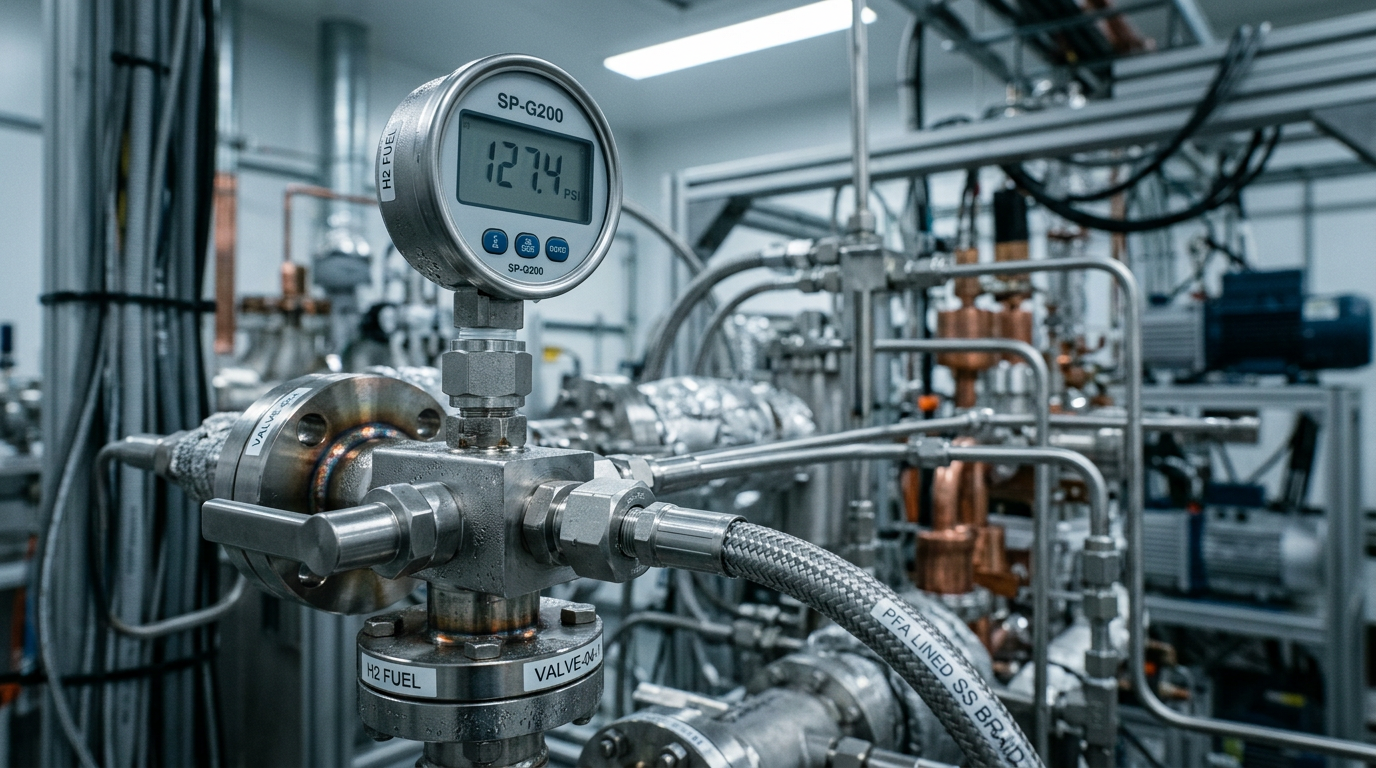
As fusion energy moves from experimental machines toward pilot plants and future commercial reactors, one challenge is rising sharply to the top of the engineering agenda: tritium accounting and safety. Tritium — the radioactive isotope of hydrogen — is essential for most early fusion concepts, especially the deuterium-tritium (D-T) reaction that offers the most achievable path to net energy gain. Explore why precise tritium accounting and safety systems are essential for future fusion power, ensuring secure, efficient, and future of sustainable clean energy.
But it is no ordinary fuel. It is rare, expensive, tightly regulated and mobile. It can diffuse through metals, escape through microscopic gaps, and complicate environmental monitoring if not carefully managed. These properties mean that safe fusion plants must track tritium with a level of precision that goes far beyond simple industrial inventory. Every gram matters, every leak matters, every atom counts.
It’s easy to picture the dazzling plasma inside a reactor. What’s harder to imagine — but equally crucial — is the network of detectors, containment systems, metrology instruments and regulatory frameworks working quietly in the background to ensure that tritium is handled with extreme care.
In this article, we’ll explore the hidden world of accounting: why it matters, how fusion plants will monitor and control tritium inventories, what international rules govern its handling, and how advances in sensors and modelling tools will shape the next generation of safe, commercially viable fusion reactors.
Why Tritium Accounting Matters More Than Ever
Fusion’s most mature fuel cycle uses deuterium and tritium. Deuterium is abundant in seawater; tritium is not. With only a few kilograms available worldwide today, and with fusion plants expected to need multiple kilograms each year, tritium becomes both a critical fuel and a critical safety responsibility.
Safety matters because tritium emits low-energy beta radiation. It cannot penetrate skin, but if inhaled, ingested or absorbed, it can pose internal health risks. Its mobility — behaving chemically like hydrogen — means it can move through materials far more easily than most radioactive substances. This makes containment and monitoring essential to protect workers and the environment.
Security also matters. Tritium has sensitive uses in military technologies, which means governments strictly regulate its production, transfer and storage. Even small discrepancies in accounting must be understood and documented — not only for environmental safety, but to maintain international trust and compliance.
In short: tracking tritium is both a scientific responsibility and a geopolitical necessity.
The International Framework for Tritium Safety
Future fusion plants will not operate in a regulatory vacuum. They will fall under a blend of nuclear-safety frameworks, radiation-protection standards, and international controls. Although fusion does not produce long-lived high-level waste like fission, tritium handling still brings fusion under several regulatory umbrellas.
Key frameworks include:
• IAEA Safety Standards
The International Atomic Energy Agency sets global guidelines for handling radioactive materials, monitoring releases and ensuring environmental protection. Fusion facilities will adopt IAEA-aligned practices for:
- tritium containment
- personnel exposure limits
- waste handling
- environmental surveillance
- accident prevention and emergency planning
• National Regulatory Agencies
Countries including the U.S., U.K., Korea, Japan, Canada and France have already begun drafting fusion-specific regulatory pathways. Tritium handling is often the first item addressed.
• Nuclear Suppliers Group (NSG) Controls
Because it can be used outside civilian applications, international transfers require licensing, justification and robust material-accountancy systems.
• Environmental Protection and Occupational Safety Laws
These require plants to monitor airborne tritium, water pathways, and worker exposure — with strict thresholds and reporting rules.
Together, these frameworks form a multilayered system designed to ensure that fusion plants treat tritium with the same rigor as other nuclear materials, even though the associated risks are lower.
How Fusion Plants Will Track Tritium Internally
Inside a fusion plant, it will constantly move between systems: fuel injectors, vacuum chambers, breeder blankets, purification loops, storage beds, exhaust systems and tritium recovery units. Each stage introduces potential loss routes — permeation, adsorption, leakage, or chemical bonding.
A modern fusion plant must therefore act like a highly sensitive, fully audited chemical factory. To accomplish this, several technologies work together.
Real-Time Mass Accounting Systems
The core of tritium control is the material balance area (MBA), an international-standard concept used in nuclear fuel cycles. Every plant will divide the facility into MBAs — zones where tritium can be measured entering and leaving.
Advanced mass-balance algorithms can detect differences as small as milligram-scale deviations, triggering investigation or recalibration.
These systems integrate data from:
- flow meters
- concentration analysers
- pressure sensors
- isotopic composition monitors
- temperature and humidity sensors
All feeding into a central data-management system that regulators can audit.
Tritium Detectors and Monitoring Tools
Next-generation monitors allow plants to track even tiny quantities of gaseous or water-bound tritium.
Key detection technologies include:
• Ionization Chambers
Sensitive to low-energy beta emissions from tritium gas.
• Scintillation Counters
Used for tritiated water detection in environmental samples.
• Infrared or Raman Spectroscopy
Capable of distinguishing hydrogen isotopes in real time.
• Laser-Based Tritium Sensors
Emerging tools that may achieve parts-per-million precision with rapid response times.
• Passive Monitors and Dose Badges
Worn by workers or placed around the site to ensure extremely low radiation uptake.
These systems create a multi-layered net, ensuring that even microgram quantities of tritium can be detected and traced.
Future of Cean Energy Permeation Barriers and Advanced Materials
Because tritium can seep through stainless steel and other conventional alloys, materials science becomes a critical part of safety.
Fusion plants will use:
- advanced coatings (e.g., alumina, tungsten, SiC)
- double-walled piping
- getter beds that absorb stray hydrogen isotopes
- vacuum jackets and gloveboxes for sensitive processes
These limit the possibility escaping into the environment.
Detritiation Systems
If tritium escapes into air or water inside the plant, detritiation systems remove it quickly using:
- catalytic oxidation
- cryogenic absorption
- high-temperature molecular sieves
Recovered tritium is purified and returned to the fuel cycle.
This “closed-loop philosophy” ensures minimal loss and maximal recycling — essential for sustainability and safety.
Environmental and Worker Safety in a Tritium-Using Fusion Plant
Fusion facilities will adopt a layered safety approach that resembles both pharmaceutical cleanrooms and advanced nuclear labs.
Ventilation and Airflow Control
Negative-pressure zones ensure that any released tritium stays inside controlled areas.
Secondary Containment
Equipment is often enclosed within larger containment systems so a failure in one layer doesn’t become a release event.
Stringent Access Controls
Only trained personnel handle systems, supported by radiation-protection protocols, monitoring badges and real-time environmental sensors.
Regular Auditing and Calibration
Regulators require frequent calibration of detectors, replacement of filters, contamination surveys, and cross-checking of mass balance sheets.
These procedural controls provide redundancy — not to compensate for danger, but to maintain impeccable confidence in safety.
The Future of Tritium Tracking: Digital Twins and AI
As fusion plants become more complex, technology is advancing to support safer and more efficient tritium management.
Digital twins — virtual replicas of the entire system — will allow engineers to simulate leaks, predict diffusion, optimize storage and test emergency scenarios with high accuracy.
Artificial intelligence and machine learning will assist in:
- anomaly detection
- predictive maintenance
- rapid identification of tritium losses
- real-time optimization of fuel-cycle efficiency
The result: safer plants, better performance and reduced operational costs.
Conclusion
As fusion transitions from bold experiments to pilot plants and early commercial reactors, safety is emerging as a defining challenge — not because it is insurmountable, but because it demands precision, clarity, and international trust. Tritium’s unique behaviour means that fusion plants must monitor, track and control the fuel cycle with extraordinary care. Thankfully, modern metrology, sensing technologies, advanced materials, digital twins and regulatory frameworks make this not only possible, but practical.
Fusion’s promise isn’t just about replicating the power of the stars. It’s also about showing that humanity can steward sensitive materials with responsibility and foresight. Getting tritium accounting right will be one of the keystones of public confidence in fusion energy — and one of the strongest signals that fusion is ready to move from laboratory dreams to worldwide deployment.




