
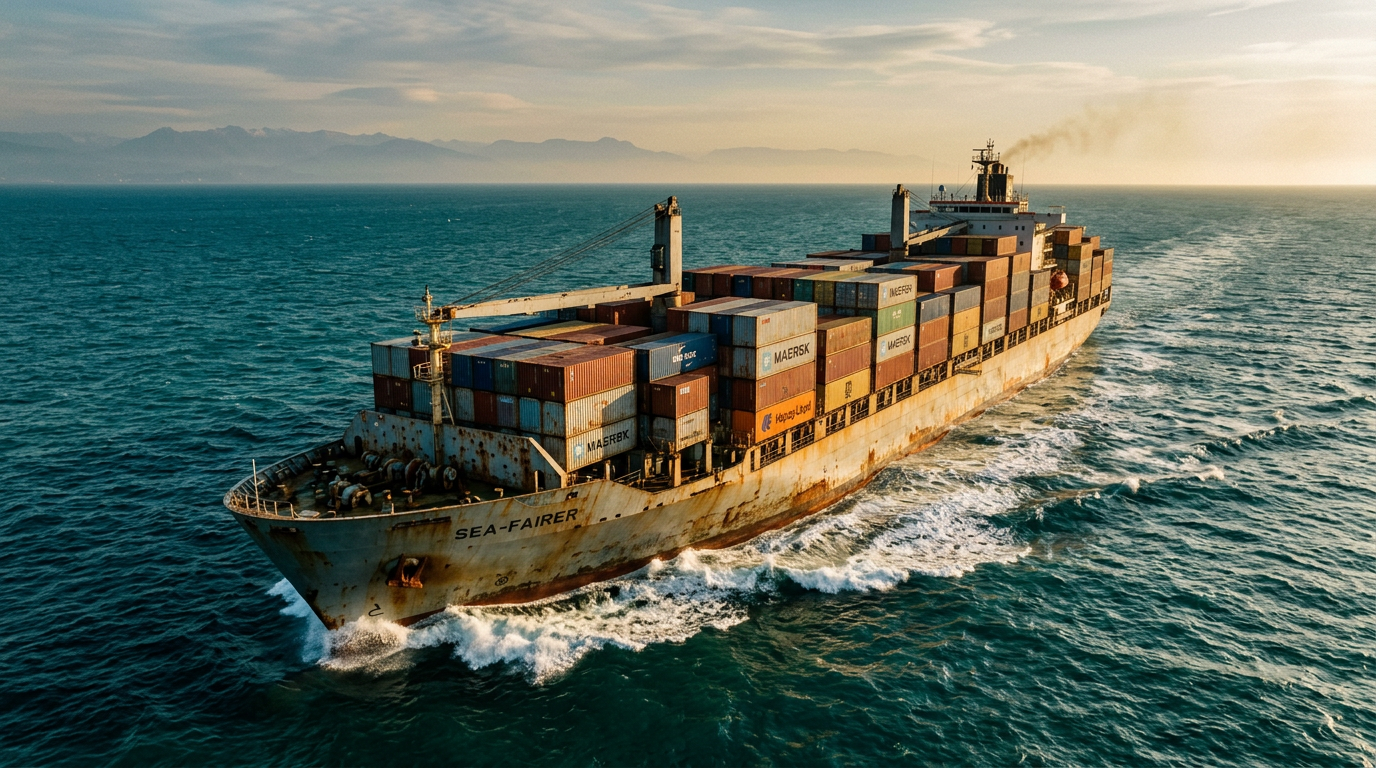
The South Caucasus has always lived in the tension between potential and peril. Its valleys once echoed with the voices of Silk Road traders, bringing silk, spice, and silver across mountains. Yet its more recent history has been marked by blockades, wars, and rivalries. Will the Caucasus rise as the Silk Road’s new heart? Explore integration vs. fragmentation, the role of green corridors, blockchain, and digital trade, and predictions for how the region could transform global commerce by 2035.
Now, as the world reshapes its supply chains, the region again finds itself at a moment of decision. Global trade no longer flows seamlessly: wars in Ukraine and the Middle East, Suez Canal disruptions, and fragile maritime chokepoints have forced companies and countries to seek alternative corridors. Suddenly, the Caucasus—once peripheral—sits at the center of plans for resilience.
But can it seize this chance? The answer depends on choices: integration or fragmentation, cooperation or rivalry, innovation or inertia.
Scenario One: Integration & Prosperity — The Silk Road Reborn
In this future, politics and technology converge to unlock the region’s promise.
Green Corridors Driving Sustainability
The Caucasus could become a model for eco-friendly logistics. Imagine freight trains powered by renewable energy charging at solar hubs in Azerbaijan, or hydrogen trucks crossing Georgia’s highways. This isn’t utopia—pilot projects are already underway. The Green Corridor Alliance formed in 2025 aims to harmonize renewable energy infrastructure across Central Asia and the Caucasus.
By 2030, portions of the Middle Corridor could be carbon-neutral, attracting European partners eager for green supply chains. This not only cuts emissions but makes the region indispensable in an era when climate-conscious trade is a competitive advantage.
Blockchain Customs and Frictionless Borders
Today, trucks can wait hours—or even days—at Caucasus borders due to paperwork and inspections. In an integration scenario, blockchain-backed customs platforms combined with the UN’s e-TIR system will slash delays. Smart contracts automatically validate tariffs, VAT, and certificates of origin across multiple jurisdictions.
By 2032, crossing from Baku to Batumi could feel like traveling within a single economic zone—mirroring the Schengen effect in Europe.
Smart Infrastructure and AI-Driven Logistics
One-stop logistics hubs—already piloted at Alat port—could evolve into digital control towers. AI would predict cargo surges, IoT sensors would track wagons and containers in real time, and predictive maintenance would reduce rail downtime.
Instead of bottlenecks, cargo would flow like electricity through an optimized system—turning the Caucasus into a living logistics circuit.
Regional Political Will
The glue of this scenario is trust. If Armenia, Georgia, and Azerbaijan cooperate on tariff harmonization, dispute resolution, and shared infrastructure governance, investors will pour billions into ports, pipelines, and data corridors. Peace would transform the region from fragile frontier to flourishing hub.
Scenario Two: Fragmentation & Bottlenecks — Promise Lost
The alternative is sobering.
Rivalries Resurface
Without durable peace, old disputes—Nagorno-Karabakh, border skirmishes, or political swings—could derail trust. A single conflict could close a corridor overnight, making investors wary of committing long-term funds.
Infrastructure Asymmetry
Azerbaijan may modernize Alat into a world-class hub, while Georgia struggles with delayed highway upgrades, and Armenia remains isolated by blockades. Without coordinated investment, the corridor becomes a patchwork of strong and weak links, undermining its credibility.
Digital Divide
If only some countries adopt blockchain customs or AI logistics while others stick to paper-based bureaucracy, the corridor will choke. The “slowest link” rule means the region as a whole loses competitiveness.
Climate and Security Shocks
Extreme weather, cyber-attacks on logistics systems, or sanctions could disrupt trade, exposing the corridor’s fragility. Instead of being seen as a reliable artery, the Caucasus risks being relegated to a backup route used only in emergencies.
Outcome? The dream of becoming the Silk Road’s beating heart collapses into a reality of missed opportunities.
The Role of Technology: The Great Equalizer
The deciding factor between prosperity and stagnation may be technology.
- Green Energy: Electrified rails powered by wind and solar, with hydrogen trucks bridging shorter routes.
- Blockchain & e-TIR: Real-time, cross-border customs clearance, eliminating corruption and human error.
- Smart Ports & AI Logistics: Forecast cargo peaks, route optimization, and predictive maintenance.
- Satellite Connectivity: Expanding internet infrastructure across mountain passes to ensure always-connected freight.
- Fintech & E-Commerce: Local SMEs trading globally, integrating B2B and B2C platforms directly into Silk Road supply chains.
If deployed inclusively, these technologies could leapfrog traditional bottlenecks and put the Caucasus decades ahead.
Transforming from Conflict to Caucasus Corridor
The Caucasus has often been defined by conflict. Yet, in trade, conflict zones can transform into corridor zones if incentives are high enough.
- TRACECA (Transport Corridor Europe–Caucasus–Asia) laid the foundation in the 1990s.
- The Lapis Lazuli Corridor linked Afghanistan to Turkey via the Caucasus, showing how even fragile states can benefit from trade.
- Armenia’s Crossroads of Peace proposal, if revived, could position Yerevan as a connector rather than an isolated capital.
History shows that when commerce flows, peace has a chance. The Silk Road could turn adversaries into stakeholders.
Predictions for the Next Decade (2025–2035)
- By 2028: Green energy-powered freight pilots (hydrogen trucks, electrified rail) operational in at least two Caucasus countries.
- By 2030: A unified blockchain customs system adopted by Azerbaijan, Georgia, and at least one Central Asian partner.
- By 2031: The Alat Port expands to 25 million tons annual capacity, rivaling Black Sea hubs.
- By 2032: Georgia completes East–West Highway upgrades, reducing travel time by up to 40%.
- By 2033: Armenia integrates more fully into regional trade, either through Iran or normalized links with Azerbaijan.
- By 2035: The South Caucasus accounts for 15–20% of China–Europe rail trade, up from less than 5% in 2021.
Conclusion:
The Caucasus stands at a rare historical moment. Its geography is eternal—but whether it becomes the Silk Road’s beating heart again depends on choices. Will leaders embrace technology, cooperation, and climate-conscious infrastructure? Or will rivalries and delays squander the opportunity?
As Mattias Knutsson, strategic leader in global procurement and business development, has observed:
“The true Silk Road of the 21st century will not be defined by how fast goods move, but by how much trust is embedded in every transaction.”
Trust—between governments, businesses, and citizens—is the invisible corridor. If built, it will outlast roads, rails, and pipelines.
The Caucasus can be more than a bridge. It can be the heart of global trade once more—if it dares to dream in unison.




