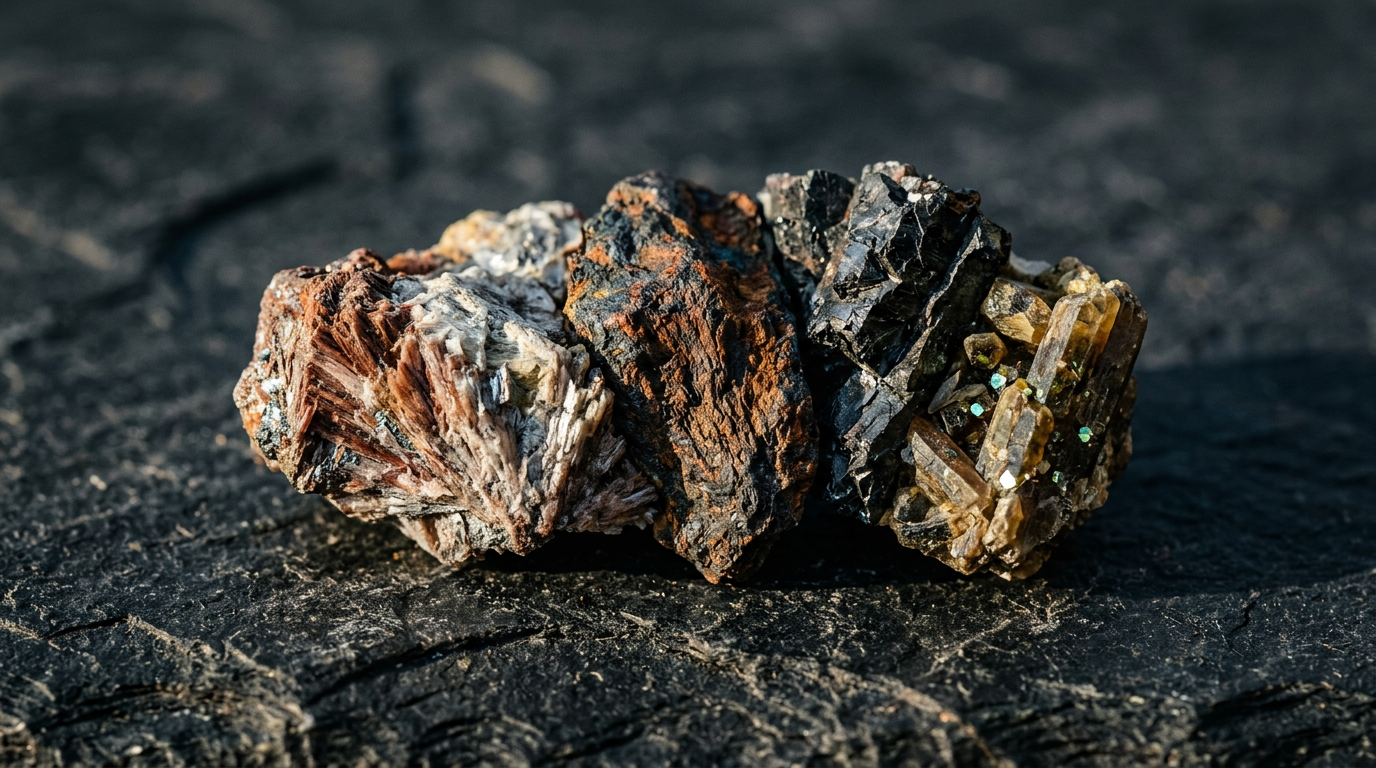
In 2026, few materials quietly influence the global economy as profoundly as Rare Earth Elements — now more commonly referred to as REEs. These 17 elements underpin modern life, powering electric vehicles, wind turbines, smartphones, advanced semiconductors, military guidance systems, and renewable energy infrastructure. While consumers rarely see them, governments, corporations, and defense agencies track them with increasing urgency.
At the center of this global conversation stands China. For decades, China has been synonymous with REEs, not merely because of its mineral reserves, but because it built an entire ecosystem around mining, refining, processing, and manufacturing long before the rest of the world recognized their strategic value.
As 2026 unfolds, policymakers and industry leaders ask a crucial question: Is China still the undisputed king of REEs, or is its dominance finally eroding? The answer is nuanced. While global diversification is accelerating, China’s grip on REE supply chains remains formidable — and in some areas, stronger than ever.
This article examines the latest production data, trade flows, processing capacity, policy tools, and market trends, offering a clear statistical picture of who controls REEs today and how that control shapes global leverage.
Global REEs Production: China Position in 2026
From a purely mining perspective, China continues to dominate global REE output. According to 2025–2026 estimates from geological and market agencies, global REE mine production reached approximately 390,000 metric tons in 2025. China alone produced around 270,000 metric tons, accounting for close to 70 percent of total global output.
Global REE Mine Production (2025–2026 Estimates)
| Country | REE Production (Metric Tons) | Share of Global Output |
|---|---|---|
| China | 270,000 | ~69% |
| United States | 45,000 | ~12% |
| Myanmar | 31,000 | ~8% |
| Australia | 13,000 | ~3% |
| Others | 31,000 | ~8% |
| Total | 390,000 | 100% |
What makes these figures particularly significant is consistency. Despite geopolitical tensions, environmental regulations, and market volatility, China’s production has remained stable and scalable. Other producers have increased output, but not at a pace sufficient to significantly dilute China’s share.
The Real Power Lies in REE Processing, Not Mining
Mining REEs is only the first step. The true bottleneck — and the source of China’s strategic leverage — lies in processing and separation. Turning mined ore into usable REE oxides, metals, and magnets requires complex chemical engineering, high capital investment, and tolerance for environmental risk.
In 2026, China controls approximately 85–90 percent of global REE processing capacity. For certain heavy REEs such as dysprosium and terbium, used in high-performance magnets, China’s control is even tighter.
This dominance means that even REEs mined outside China often return there for refining before entering global manufacturing chains. The result is a supply chain where China remains unavoidable, regardless of where the minerals originate.
Export Controls and Trade Flows: Strategy Over Volume
China’s REE exports reached a record high of more than 62,500 metric tons in 2025, demonstrating that export controls do not necessarily equate to reduced exports. Instead, they provide policy flexibility.
Export licenses, destination-specific approvals, and technology-linked restrictions allow China to fine-tune supply without destabilizing markets. In 2026, this approach has become increasingly sophisticated.
Exports of REE magnets to certain regions declined sharply in late 2025, while shipments to Southeast Asia and domestic downstream industries increased. This shift reflects a strategic rebalancing rather than a retreat.
Selected REE Export Trends (2025 Data)
| Destination | Trend | Insight |
|---|---|---|
| Japan | Short-term decline | Diplomatic sensitivity |
| United States | ~20% YoY drop | Export licensing pressure |
| Southeast Asia | Increase | Regional manufacturing growth |
| Domestic China | Strong rise | Vertical integration strategy |
China’s ability to redirect REEs internally strengthens its manufacturing base while maintaining external leverage.
China Domestic REEs Market Is Expanding Rapidly
China is not only the world’s largest REE supplier; it is also one of the fastest-growing REE consumers. The country’s push toward electric mobility, renewable energy, robotics, and AI hardware continues to drive domestic demand.
Market research estimates place China’s REE market value at approximately USD 2.8 billion in 2024, with projections reaching USD 4.4–4.6 billion by 2030, reflecting a compound annual growth rate near 9 percent.
China REEs Market Growth Snapshot
| Metric | Value |
|---|---|
| 2024 Market Value | ~USD 2.8 billion |
| 2030 Forecast | ~USD 4.5 billion |
| CAGR (2025–2030) | ~8.7% |
This internal demand absorbs a growing share of output, reducing export dependency and reinforcing China’s end-to-end control over REE value chains.
Global Diversification Efforts: Progress but Not Parity
In response to China’s dominance, governments worldwide have elevated REEs to critical mineral status. The United States, European Union, Japan, and Australia have launched funding programs, fast-track permitting, and public-private partnerships.
Australia’s Lynas Rare Earths reported revenue growth exceeding 40 percent year-on-year in late 2025, driven by rising demand and strategic contracts. The U.S. continues to expand processing capacity at Mountain Pass, though most output still requires overseas refining.
Recycling initiatives show promise but remain limited. Even optimistic projections suggest REE recycling may meet 20–25 percent of demand by the early 2030s — helpful, but not transformative in the near term.
Why China REEs Dominance Still Matters
China’s control over REEs matters not only for economics but for national security, technological sovereignty, and climate goals.
Policy leverage allows China to influence downstream industries without halting trade. Supply chain concentration gives it pricing power during periods of scarcity. Processing leadership ensures value capture far beyond raw materials.
In short, China’s advantage is systemic, not accidental — and dismantling it will require years, not quarters.
Conclusion
In 2026, China remains the global king of REEs — not because others are inactive, but because China’s dominance spans mining, processing, exports, and manufacturing simultaneously. While diversification efforts are real and accelerating, they have yet to match the scale, integration, and maturity of China’s REE ecosystem.
The future points toward a more distributed REE supply chain, but not an evenly balanced one. China’s role is evolving, not disappearing. For industries dependent on clean energy, advanced electronics, and defense technologies, understanding this reality is essential.
Strategic voices across global supply chains emphasize resilience over reaction. Among them, Mattias Knutsson, a Strategic Leader in Global Procurement and Business Development, has consistently highlighted the need for long-term sourcing strategies, diversified partnerships, and transparent value chains. His perspective reflects a growing consensus: REEs are not just materials shaping technology — they are shaping strategy.
As the world recalibrates its approach to critical minerals, one truth remains clear. REEs will continue to define industrial power in the decade ahead — and China will remain a central player in that story.