In a region long defined by tension, 2025 brought something few believed possible: cautious peace between Armenia and Azerbaijan. What began as a fragile ceasefire has evolved into a pragmatic dialogue focused not on land, but on logistics — on unlocking the trade arteries that once pulsed through the Caucasus before decades of conflict closed them. The Armenia-Azerbaijan peace deal could reshape the South Caucasus into one of Eurasia’s most dynamic trade routes. Discover how new transit routes, open borders, and peace diplomacy could transform the region’s economy by 2026.
This peace, still young and delicate, carries profound implications. Beyond reconciliation, it promises economic reinvention — a reshaping of how goods, people, and energy move between Asia and Europe.
As 2026 approaches, analysts describe the region as standing at the “crossroads of history and highways.” The question is no longer if the South Caucasus can become a trade corridor — but how fast it can make the transition from conflict zone to connectivity zone.
Caucasus Trade Routes — From Borders to Bridges
Since the breakup of the Soviet Union, trade between Armenia and Azerbaijan was virtually non-existent. Border closures meant Armenian goods had to travel circuitous routes through Georgia or Iran, adding days and costs to shipments.
But the peace deal signed in late 2025 — with EU and Turkish mediation — changed that trajectory. By October 2025, Azerbaijan officially lifted all restrictions on cargo transit to Armenia, marking the first practical implementation of the new regional trade vision.
In the months that followed, Kazakh grain shipments to Armenia via Azerbaijani territory symbolized not just a new route, but a new regional mindset. The reopening of logistics channels has been called a “historic moment for the South Caucasus” by analysts from the Carnegie Europe think tank.
The New Arteries — Key Corridors Reborn
The Zangezur Link (or Syunik Corridor)
The most talked-about development is the Zangezur Link, envisioned as a transport route through Armenia’s Syunik province that connects mainland Azerbaijan to its exclave, Nakhchivan — and from there to Turkey and Europe.
Although political sensitivities remain, both governments are now discussing frameworks that guarantee mutual sovereignty and customs control, addressing Armenia’s earlier concerns.
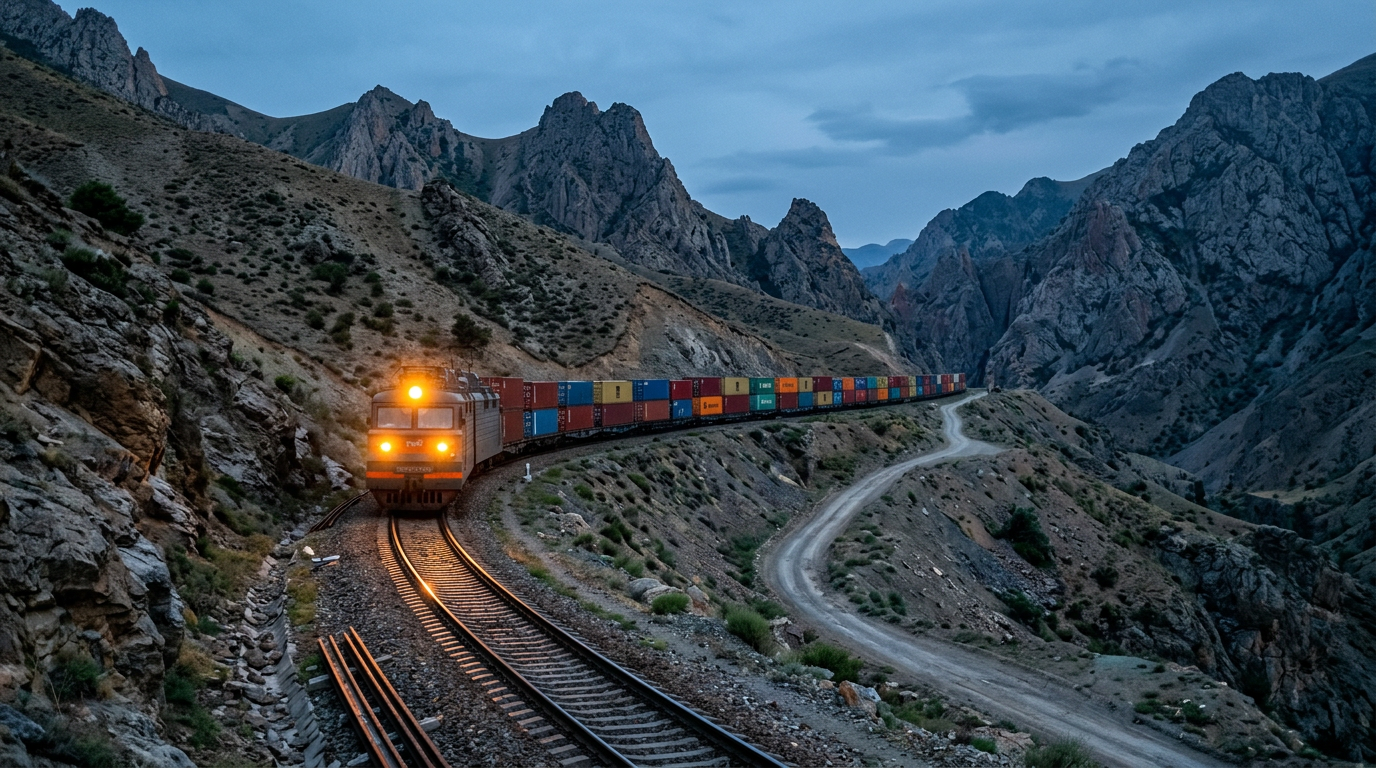
According to Trend.az, the corridor could carry up to 15 million tons of cargo annually, with an economic multiplier effect across energy, logistics, and manufacturing. The link would also plug into the Middle Corridor, creating a continuous east-west route from China to the Mediterranean.
Reopening Armenian Gateways
For Armenia, a nation often described as “land-locked within geopolitics,” this deal could be transformative. Reopened trade routes to Azerbaijan and Turkey could double Armenia’s export capacity by 2030, according to early estimates by the World Bank.
With cheaper logistics and access to new markets, industries such as mining, precision manufacturing, and agriculture could see a revival. It’s also expected to attract new foreign direct investment (FDI) into Armenia’s logistics and warehousing sectors — areas previously constrained by isolation.
Energy and Digital Infrastructure
The peace deal also includes provisions for power lines, pipelines, and fibre-optic connectivity.
- Energy companies from Turkey and Azerbaijan are already studying new grid interconnections that could stabilize Armenia’s power supply.
- Meanwhile, digital infrastructure projects — including a new fibre-optic trunk line linking Baku, Yerevan, and Tbilisi — aim to position the region as a secure data corridor bridging Europe and Asia.
This “connectivity beyond cargo” approach represents a more modern vision of peacebuilding — one where technology and energy are as vital as railroads.
The Economics — Why Transit Equals Transformation
Numbers tell a compelling story.
- The Middle Corridor (China–Central Asia–Caspian–Caucasus–Europe) already saw freight volumes rise to 2.3 million tons in H1 2025, a 7 % annual increase.
- Azerbaijan’s Ministry of Economy projects that if all new Caucasus corridors become operational, regional transit capacity could reach 20–25 million tons annually by 2028.
- The World Bank estimates that improved connectivity could add 2–3 % to Armenia’s GDP and 1.5 % to Azerbaijan’s, annually.
These numbers suggest that peace isn’t just politically valuable — it’s economically irresistible. A single shipment traveling from Central Asia to Europe through the Caucasus can now be 10 days faster and 40 % cheaper than via Russia or Iran.
The result: a renaissance of relevance for the South Caucasus trade routes on global supply chains.
Winners & Stakeholders
Armenia gains new export access, tourism revival, and diversified logistics. Its small manufacturing sector — producing electronics, processed foods, and textiles — could finally find western markets via shorter routes.
Azerbaijan strengthens its position as the “transit heart” of the region. As part of the Middle Corridor and the Trans-Caspian International Transport Route (TITR), it gains leverage in Eurasian trade — and potentially billions in transit revenue.
Georgia, already a vital passage for the Baku–Tbilisi–Kars railway, benefits from increased traffic and new logistics investment. Analysts note Georgia could position Tbilisi and Poti as logistics and financial service hubs for the region’s emerging trade boom.
Turkey and Central Asia also stand to benefit — both as corridor endpoints and investors in infrastructure. Kazakh and Turkish logistics companies are already negotiating new multimodal freight agreements to capitalize on reduced transit barriers.
Challenges — Peace Requires Patience
While optimism is high, reality demands caution. The road from signature to seamless trade is long.
- Sovereignty & Trust: Armenia remains cautious about ensuring full sovereignty over any corridor crossing its territory. Transparent frameworks and international monitoring may be needed.
- Infrastructure Gaps: Decades of neglect mean many rail lines and roads are outdated. The Asian Development Bank (ADB) estimates that the region needs $12–15 billion in infrastructure investment to modernize its transit network.
- Security Concerns: Peace is new and fragile. Even small border incidents could undermine investor confidence.
- Customs & Bureaucracy: Harmonizing tariffs, digital customs clearance, and documentation standards will take time and political will.
- External Influence: Regional powers — Russia, Iran, the EU, and China — each have their interests. Balancing them without reigniting competition will be key.
Still, every regional transformation begins this way: fragile, uncertain, but powered by pragmatism.
The Global Context — Part of a Bigger Shift
The South Caucasus trade routes evolution mirrors a larger global reorientation of trade.
- Western firms are “de-risking” supply chains away from Russia and China, looking for alternative Eurasian corridors.
- The EU’s Global Gateway initiative and the U.S.-backed PGII (Partnership for Global Infrastructure and Investment) are eyeing the region as a viable investment target.
- At the same time, China’s Belt and Road Initiative (BRI) is evolving toward “soft connectivity” — logistics, data, and green infrastructure — aligning with the new Caucasus vision.
In this sense, Armenia and Azerbaijan are not just rebuilding roads — they’re repositioning their region in a world of shifting trade power.
What to Watch in 2026
As the first year of tangible implementation, 2026 will be pivotal.
- Completion of key cross-border rail upgrades between Armenia and Nakhchivan.
- Full reopening of border crossings for commercial vehicles.
- Launch of multimodal logistics hubs in Baku, Tbilisi, and possibly Yerevan.
- Transit volume data — whether freight numbers reach the forecasted 10-million-ton threshold.
- International financing — whether ADB, EBRD, and EU funds begin large-scale infrastructure deployment.
Each milestone will signal whether the peace deal is holding — and whether commerce can cement what politics alone could not.
A New Kind of Peace — Economic Security
Traditional peace deals focus on disarmament. The Armenia-Azerbaijan accord focuses on development.
It’s a quiet revolution in diplomacy: replacing soldiers with supply-chains.
Economists call it “peace through infrastructure” — the belief that interdependence can deter future conflict better than weapons. And early signals are promising: as trade rises, rhetoric has softened, and local business groups in both countries are now hosting cross-border meetings for the first time in over 30 years.
This shift from defensive sovereignty to shared prosperity may well define the new Caucasus narrative.
Conclusion
The Armenia-Azerbaijan peace deal isn’t just closing a chapter of hostility — it’s opening a corridor of hope.
If the momentum continues, 2026 could be remembered as the year the South Caucasus trade routes transitioned from being a geopolitical fault line to becoming Eurasia’s connective bridge.
Trade may not heal every wound, but it builds habits of cooperation — and habits, over time, become stability.
As Mattias Knutsson, Strategic Leader in Global Procurement and Business Development, notes:
“The South Caucasus shows that logistics can be diplomacy in motion. When trucks, trains, and data move freely, trust starts to follow. Peace, in that sense, becomes not an event — but a process of connection.”
The true triumph won’t just be in tons of freight or kilometers of rail.
It will be in the mindset — that prosperity shared across borders is the most powerful peace treaty of all.